
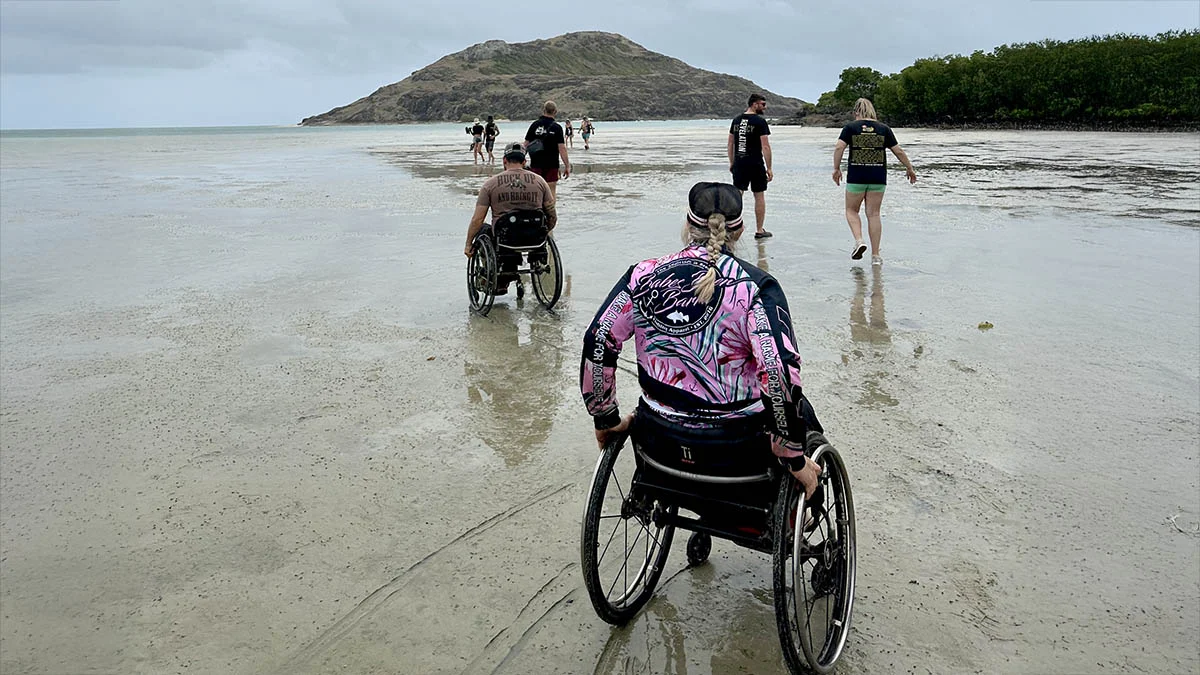
My injury doesn’t define me. I navigate the outdoors and I refuse to let anything hold me back. Here’s how camping helped me reclaim my life.
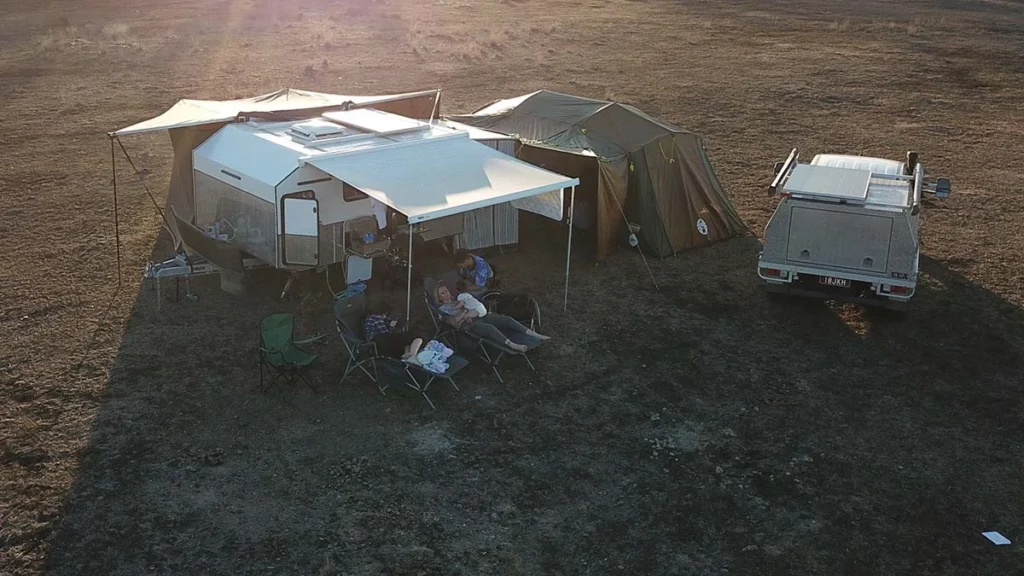
My love of camping started not long after my spinal injury. When I was just 18, I bought a 40-acre (16.2ha) property and started camping by the river. What began as a simple hobby quickly became a lifelong passion. I think my love of camping comes from my love of freedom, open spaces and the chance to explore and experience new things.
Over the years, my family and I have travelled to some pretty remote and rugged spots—places like Lockhart River, Longreach, Cape York and Lakefield.
One of my most unforgettable adventures was camping on the sands of Punsand Bay, near the northernmost tip of Queensland. Sand is somewhat my “nemesis” as a wheelchair user, but the location was breathtaking—the tropical scenery, stunning sunsets and even the occasional crocodile passing by. It was just beautiful, the feeling of being right on the edge of Australia. That experience really brought home both the joys and the realities of accessible adventure where freedom and safety must go hand in hand.
My top camping tips
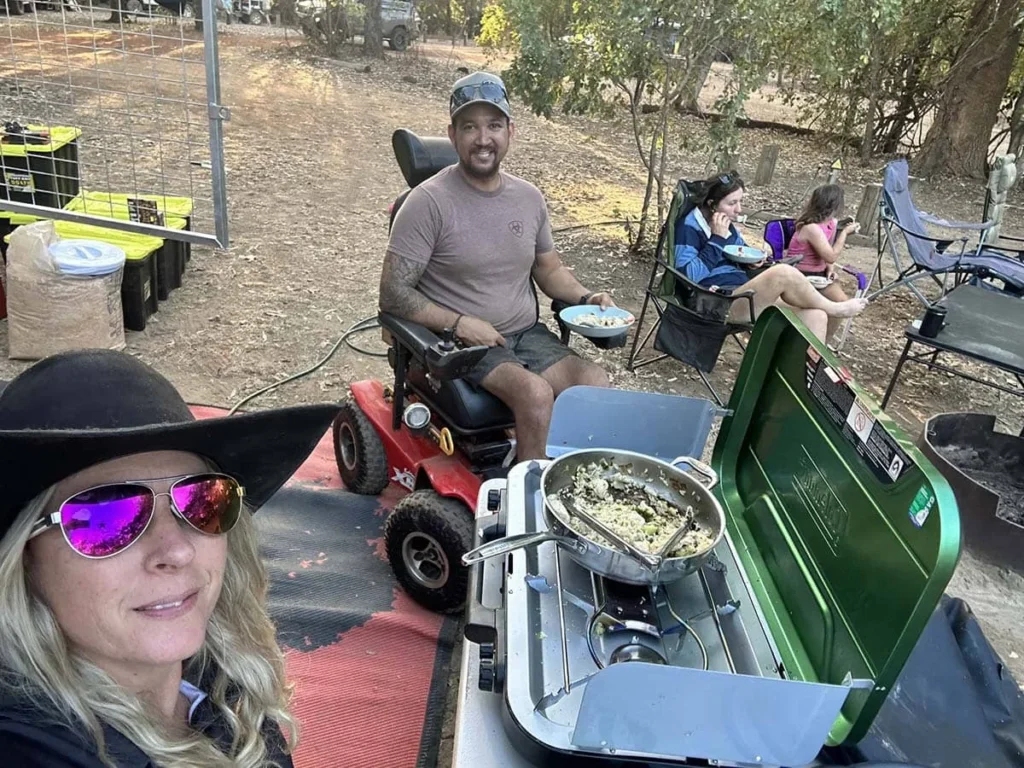
When packing for camping, it’s crucial to prioritise your injury needs first. As someone with a spinal cord injury, this means bringing essential items such as medications, catheters, wipes and hand sanitiser. Setting up a clean and safe space to manage daily bladder and bowel routines is important, and wearing clothing that’s easy to put on and take off will make things much easier.
Protecting your skin should never be overlooked. A good travel cushion is vital for long drives and a pressure-relieving mattress can make all the difference at night. Taking care of your skin is non-negotiable to ensure comfort and health throughout your trip.
It’s important to set realistic expectations based on the camping location. Consider challenges like staying clean in dusty environments or keeping warm in cold weather—this might require careful planning or even changing your plans altogether. Don’t exhaust yourself by doing tasks you dislike; for instance, if cooking isn’t enjoyable, choose a campsite that offers catering or bring ready-made meals.
Before purchasing gear, it’s wise to test it out, such as visiting camping showrooms to ensure everything is lightweight and manageable. Even tents marketed as “quick set-up” might take longer, but finding what works best for you is the key. When packing, focus on essentials that truly meet your needs, like a top-quality mattress and plenty of blankets if you’re sensitive to the cold.
Advocating for yourself is essential. Communicate your needs and limits clearly. For example, taking proper breaks during long drives helps avoid exhaustion and allows everyone to enjoy the journey more. Bringing along creature comforts, a small bag with personal must-haves like headphones, chargers, snacks and a favourite pillow, can make the experience much more enjoyable.
Don’t forget practical items like a head torch, which can be invaluable for night-time needs. If you’re new to camping, consider trying a farm stay first. Look for ones that offer a family-friendly rural experience with amenities nearby, making it a great way to test your setup and get comfortable before embarking on more remote adventures.
A desire to help others
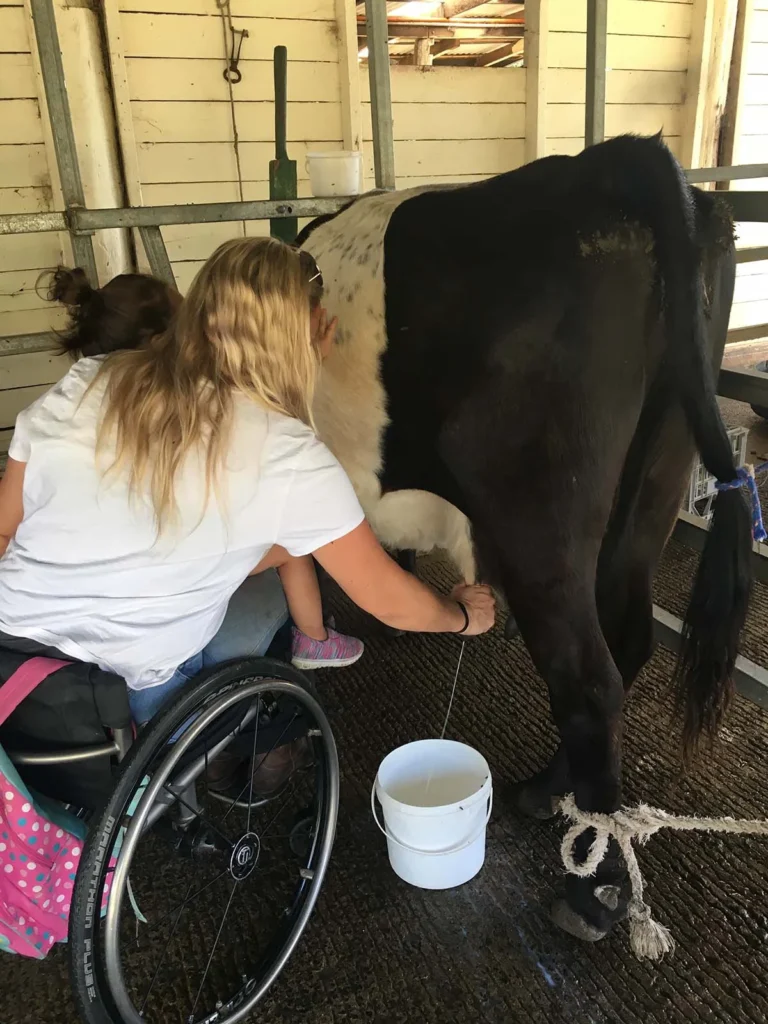
Getting outdoors, camping, reconnecting with nature and embracing adventure is where I feel happiest and most free. Through my role as a peer support team leader at Spinal Life Australia, I’m proud to support and advocate for people living with spinal cord injuries.
My journey began with my own injury which turned my world upside down, but over time, I came to realise it could also be a powerful source of strength. What started as a deeply personal experience has grown into a lifelong commitment to helping others navigate the challenges and possibilities of life after injury, whether that’s reclaiming independence, building confidence or discovering new ways to enjoy life, sometimes in ways they hadn’t imagined before.
I believe deeply in the power of self-advocacy, prioritising mental health and staying open to new ways of doing things. Your injury doesn’t define your life; how you choose to respond to it does. I’m here to remind people that no-one’s alone in facing challenges and we’re all more resilient than we give ourselves credit for.
What drives me most is helping people see the possibilities that still exist, even when life feels very different. I encourage them to set realistic goals, to advocate for themselves and to explore new ways to enjoy life—sometimes in ways they hadn’t imagined before.
My approach is all about meeting people where they’re at, being honest and authentic by sharing my own story without sugar-coating the tough parts and walking alongside them as they navigate their new reality. Whether it’s answering those difficult questions that no-one else seems to ask or simply being someone who truly “gets it”, I’m here to help people not just survive their injury, but to thrive and build a meaningful, joyful life.
For me, that joy often comes from the freedom of the outdoors, getting back to nature, camping and rediscovering that sense of adventure that reminds us all how much life still has to offer.