
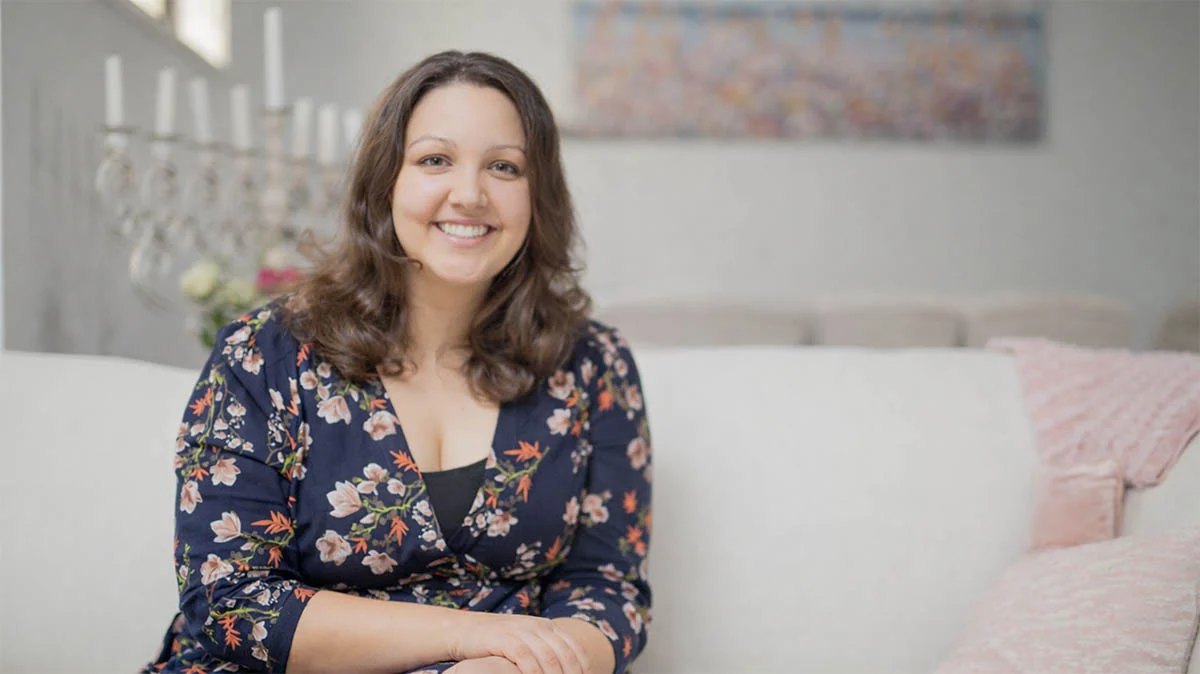
One mum shares her journey from living with pain and struggling with the healthcare system to finally holding her miracle.

“My story is unusual in that my periods weren’t that painful,” says Berniece Boeru. “They were always heavy, but I never had significant pain that couldn’t just be managed with a bit of Panadol. I thought everything was completely normal.”
When Berniece was 25, she got married and had an Implanon implant. “I was on it for six months and it caused significant issues. Mood swings, nausea, it really messed me up. I came off it, and suddenly my periods became excruciating. I would have to take time off work, staying in bed in the foetal position, in so much pain.”
The struggle to be diagnosed
It wasn’t until months later that Berniece learned about endometriosis rebound, a surge of symptoms that can occur after stopping hormonal treatment. Early days were confusing and frustrating: Her GP didn’t believe she had endometriosis, saying she couldn’t have it without having had painful periods in the past.
After many frustrating months, switching doctors and finally getting a referral to a specialist, an MRI revealed stage-4 deeply infiltrating endometriosis. “I remember just crying a lot when the doctor told me,” she says. “It was in my bowel, all over my abdomen, on my ovaries, and my fallopian tubes were twisted and scarred. She said this would affect my fertility. I remember mourning my fertility a lot, even though at that point, I didn’t actually want kids yet. It was a lot to process.”
Berniece was grateful to be diagnosed via MRI instead of the more invasive laparoscopy. “From the start of symptoms to diagnosis, it took about a year. I was then referred to an endometriosis surgeon, who planned to work with a colorectal surgeon to remove as much tissue as possible.”
The worst days of endometriosis
At her lowest points, the pain was relentless and consuming. “At my worst, I was on very strong painkillers that damaged my stomach, leaving me bedridden,” says Berniece. “I had to rely on opioid painkillers instead of non-steroidal anti-inflammatory drugs (NSAIDs) such as ibuprofen. Every four hours, I took medication with a heat pack just to get through the day. Luckily, I had very understanding bosses.”
The physical toll quickly spilled into every part of her life, including her closest relationships.
“It caused stress on my relationship with my husband and I felt down a lot, crying and questioning how I could live life with pain. It really gets you down. You don’t know how you’re going to manage, so you just take one day at a time.”
Despite how invisible her illness often was to others, her husband saw the reality behind the scenes. “My husband was the most supportive because he saw the extent of what I was going through. People would see me out and about, not knowing that I was on pain medication constantly,” recalls Berniece.
She says one of the hardest parts of living with endometriosis wasn’t just the pain itself, but the way it was misunderstood and minimised, which can increase the emotional challenges even more.
“People often think, If one in 10 women has it, how bad can it be? But it’s so debilitating. There’s a stigma around endometriosis—that if I were just healthy enough, ate a certain way, exercised or did things right, it would go away. That made me feel like it was my fault.”
She’s passionate about correcting the misconception that endometriosis is “just a bad period”.
“It affects everything about your life and it’s not limited to menstruation. It can affect every organ in your body, even your brain and lungs, and cause pain throughout your whole body. It’s debilitating.”
For many women, receiving an infertility diagnosis as a result of endometriosis brings unexpected psychological effects, impacting mental health, self-esteem and daily life. Women can feel like they don’t have a choice over whether they can have kids or they may feel guilty, like their body is defective.
Facing the potential of infertility
“My husband and I had decided we did want children. The surgeon said it would be best to remove my tubes and go straight to IVF because natural conception was definitely not possible. But we thought that was silly; we’d never actually tried to conceive. Lots of women with stage 4 can still get pregnant, so we decided to try for a year and if it didn’t work to go ahead with the surgery,” says Berniece.
The decision wasn’t easy. “I had just started my career and my husband was still studying dentistry. But at that point, the pain was constant, even outside my periods. Ovulation, bowel movements and urination were all extremely painful. I was struggling with depression and had no strategies to manage the pain. So we thought, Why not try? Pregnancy can really help with symptoms, putting endo into remission temporarily. So, we thought we should give it a go.”
Just two months after meeting with the endo surgeon, Berniece discovered she was pregnant. “It was a huge relief. I finally didn’t have pain. At first, I was constantly waiting for a miscarriage because the doctors had convinced me it wouldn’t happen. By halfway through my pregnancy, I finally accepted it was real. It felt miraculous and meaningful. I felt grateful to God. My baby truly felt like a little miracle.”
Postpartum, her periods returned gradually and breastfeeding helped manage pain. “After stopping breastfeeding, symptoms started ramping up. At first, they weren’t that bad, but then gradually over time, they became unbearable again.”
At the time of writing, Berniece is pregnant again and currently symptom-free.
Emotional resilience and self-advocacy
“If I could speak to my younger self, I would say, ‘You’ll figure it out and just take one day at a time,'” Berniece says, as she considers her journey with endometriosis. “I still have to tell myself this, because I’m aware that my endo can get worse again and then I’m going to be faced with the decision again: Whether I have more kids or get a hysterectomy. I hope that I can find a long-term solution. I still feel like there’s a lot of uncertainty and challenges and decisions to come, but facing one day at a time, one challenge at a time, one period at a time, is how I get through.
“I feel like I was more resilient before I got endo and that endo broke me down, humbled me and made me feel very out of control in my own life. It’s definitely affected my sense of identity. Part of me feels like my life experiences have made me predisposed to health issues because of stress and childhood trauma. Sometimes I just feel sorry for myself and I can get into a negative spiral. But the hope I cling to now is that when I stop having kids, I can get a hysterectomy and that will relieve me of the pain. Beyond that, there’s menopause.”
Berniece’s biggest frustration with having endometriosis was her doctors seemed to be focused on the worst-case scenario.
“I was constantly told I was infertile and needed major surgery. No-one gave me encouraging words until much later in my journey,” she says. “I largely had to educate myself by listening to podcasts, nutritionists, doctors, and anyone and everyone, trying to absorb as much as I could. I had information overload with conflicting advice. Endo is specific and personal, so I had to find what worked for me and what didn’t. I also dabbled in different diets and lifestyles. Before getting pregnant both times, I went vegan for several months, which may have helped reduce inflammation in my body.”
Endometriosis and fertility
Between pregnancies, Berniece saw a female specialist who changed her outlook—the first doctor to offer her encouragement since her diagnosis.
“She told me only 30 per cent of women with endo have fertility issues and emphasised how stress, fears and mental wellbeing affect fertility much more sometimes than endo does,” Berniece says. “She told me to trust that everything is likely to be okay. Being positive can go a long way and it helped me tremendously.”
Navigating infertility and exploring fertility treatment can take a huge emotional toll on both partners. Many women, including Berniece, describe the fertility journey as an emotional rollercoaster with feelings of hope, fear and anxiety coming and going in waves.
For those currently struggling, Berniece acknowledges it’s normal to experience a lot of emotional strain during this time and accepting the reaction can help preserve one’s mental health. By acknowledging the emotional journey, seeking professional help and leaning on friends, family and partners, Berniece believes women can navigate this challenging chapter with a greater sense of inclusion and hope.
“Don’t immediately assume the worst. Stay hopeful. You will figure out a way to live life,” Berniece offers, by way of encouragement.
Read next: Bindi Irwin’s miracle baby
If you have recently been diagnosed with endometriosis, Berniece recommends reading How to Endo and visiting the Endometriosis Australia website.