

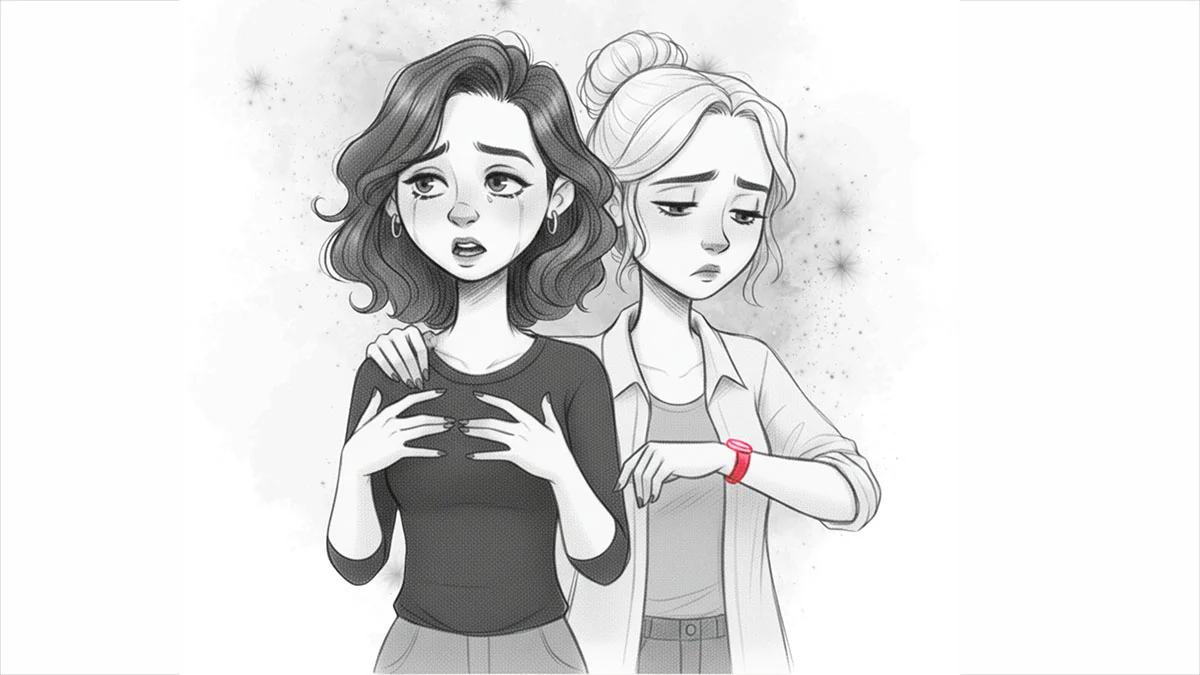
Emotional regulation isn’t about being the calmest parent in the room. It’s about staying connected, even in hard moments.

Emotions aren’t bad. They aren’t problems to fix or behaviour to punish. They are messengers. Beneath every meltdown, slammed door or sullen silence is a feeling asking to be felt, and beneath every feeling is a need waiting to be met.
When we meet emotions with compassion, we send a life-changing message: All of you is welcome here. All your feelings belong.
That doesn’t mean letting emotions run wild or giving up on boundaries. It means creating emotional safety, a home where feelings are safe to be expressed, explored and soothed. It means being a steady anchor in the storm so that children learn, through us, that emotions can be survived.
But here’s the challenge: most of us weren’t raised this way. Many of us were told to stop crying, toughen up, calm down, learning which feelings were acceptable and which had to be hidden. So, when our children bring us their big emotions, they also stir up our own. The flood of shame, fear or anger? It’s often the echo of our own childhood heartprints.
Why this matters
Parents today carry unprecedented stress, and children feel it. The “perfect parent” trap keeps so many of us stuck in cycles of exhaustion and reactivity: Children explode, we react, guilt follows and everyone feels more disconnected.
When emotions run high, our instinct is often to shut them down: Stop crying. Calm down. Don’t be silly. Not because we don’t love our kids, but because most of us were never shown another way. Our own childhood experiences taught us which feelings were “acceptable” and which had to be hidden.
When we dismiss feelings, children learn to hide them, often repeating patterns of our family’s past. Over time, this shows up as anxiety, aggression or perfectionism, their nervous systems never fully learning to regulate. They become the child who hides their tears, lashes out instead of asking for help or feels shame simply for feeling. Meanwhile, our own unmet emotions leak out in sharp tones and endless guilt.
But compassion flips the script. When children feel emotionally safe at home, they learn that all feelings are safe to feel, that big emotions don’t make love disappear and that there’s nothing wrong with them for feeling. This foundation of emotional intelligence shapes every future relationship they’ll have.
Compassion isn’t soft parenting; it’s protective. It’s revolutionary. It says, “You can bring me your whole self and I will stay.” This revolution begins when you pause instead of snap, when you sit beside tears instead of trying to stop them, when you see emotions as information, not emergencies.
Most importantly, when children feel emotionally safe at home, they carry that safety into every part of their lives. They learn to trust themselves, to express rather than suppress, to seek connection rather than hide in shame.
That’s how we break free from the perfect parent trap. That’s how we start a family revolution, by changing the way we respond to the very thing that most overwhelms us: emotions.
When heartprints are pressed
Every parent brings invisible heartprints into their parenting—the marks left by how their own feelings were met, or not met, as children. If your tears were dismissed, if your anger was punished or if your joy was “too much”, those early experiences still echo when emotions run high in your home.
Sarah, a mother I worked with, discovered this one morning when her daughter refused to wear a dress to school. Sarah’s frustration spiked instantly, far out of proportion to the situation. As we talked, she remembered being forced into dresses as a child when she preferred pants.
Her protests back then had been shut down with, “Girls wear dresses, end of discussion.” Her daughter’s resistance wasn’t really about clothing. It pressed on one of Sarah’s old heartprints—the feelings of powerlessness and not being heard. Once she recognised this, she could respond to her daughter’s real need (autonomy over her body and choices) instead of reacting from her own wound.
When our children’s emotions collide with our past, their behaviour hooks into something old in us and suddenly we’re reacting from the child within us, responding to the child in front of us. Compassion interrupts this cycle, steadying us long enough to pause and choose.
As paediatrician Dr Billy Garvey reminds us, “Children need us to create space for their emotions rather than rushing to solutions.”
Why children need space for their feelings
Children’s emotional worlds are big and raw. A slammed door, a broken toy or a sibling’s glare can bring a wave of tears or anger that feels enormous. To us, it may seem small or irrational. To them, it’s their whole world in that moment.
Children don’t yet have the skills to regulate their feelings on their own. They need us to lend them our calm, to show them that emotions can be felt and survived. When we dismiss them or rush them, they learn how to cope, they learn their feelings are unsafe. What they need instead is space—to express, to be seen, to know their inner world matters.
What happens, however, when we do rush to regulate? Find out in this podcast episode of Life in the Grey.
We can do that when we listen. When we sit beside them without trying to fix or hush, we teach them one of the most important lessons of life: emotions are not dangerous, they are human.
What changes when you meet emotions with compassion
When you practise compassion, when you choose presence over control and curiosity over fear, transformation ripples quietly through your family.
Children learn that all feelings are acceptable, even when all behaviours aren’t, that emotions can be felt and survived, that they’re safe to bring their messy, joyful, angry, tender selves to you. They discover that relationships can hold strong even through conflict and that they can trust you with their hearts.
You discover that emotional storms pass faster when met with acceptance, that behaviour improves naturally when feelings are understood. Your own emotional intelligence grows, you feel less guilty because you’re guiding feelings rather than fighting them, and family life becomes more authentic and connected.
Your family develops a culture of emotional safety, where everyone’s inner world matters, where shared vulnerability strengthens bonds, where resilience lets you bend without breaking. You become a team, moving through challenges together rather than against each other.
Compassion isn’t a technique. It’s a way of being. These daily choices to steady yourself, to give your children the freedom to be fully human, ripple forward into how they see themselves and what they will carry into their own families one day.
Compassion creates the emotional safety where all feelings can be felt and honoured. But true safety requires more than acceptance of emotions; it also requires boundaries that children can trust. This is where many parents struggle: How do we hold firm limits while still loving unconditionally? How do we say “no” without making our children feel unloved?
The answer lies in understanding the difference between loving our children and needing them to behave in ways that make us feel like good parents. It’s about learning to love beyond behaviour.

Edited extract from The Perfect Parent Trap by Lisa Taylor.