
Discover the most important skill your child needs before school starts and how to raise a confident little lifesaver.
When most parents think of first aid, they picture mums, teachers or emergency responders doing the helping. But what if children could play a role too?
For paediatric ICU nurse Sarah Duncanson and paramedic Amy Gomes, that question became a mission that grew into their beautifully illustrated book, What little heroes do: First aid education for kids.
As frontline clinicians and mums, the two women have witnessed countless medical emergencies from common injuries to heartbreaking, preventable deaths through their work in hospitals and ambulances. What struck them most was not just the emergencies themselves, but how unprepared many young children were when accidents unfolded around them.
“We know how empowered kids can be when we teach them age‑appropriate and developmentally appropriate aid skills,” Sarah says. Together, they set out to change the culture of aid education, to make it part of every family’s routine, just like brushing teeth or putting on sunscreen.
Their book bridges that gap, showing that even younger kids can learn life‑saving skills in a way that feels safe, playful and confidence‑building.
Making first aid less frightening
The charm of What little heroes do lies in its gentle and fun approach. Instead of focusing on fearful emergency situations, it encourages students to explore what helping looks like when someone has a minor injury and to know how to call for medical help.
“It’s about the little things kids can do,” Sarah explains. “Helping a friend when they get hurt, pressing on a cut or learning to use a bandage. The important thing is that we don’t want a young person to face an aid situation for the first time without any knowledge or skill. It’s heartbreaking to think of a child standing there, not knowing what to do.”
Amy adds, “It’s remarkable how resilient kids and young people are in a crisis. From a pre‑hospital perspective, first aid training gives kids tools to reduce panic. And research shows that when primary-school‑aged children have some familiarity with emergency services and hospital staff, it dramatically decreases their anxiety.”
Weaving first aid into everyday life
According to both women, the best first aid course for kids doesn’t have to be formal. The goal is to make learning part of ordinary conversation. “The point is to bring first aid education into your household naturally. Talk about safety at the dinner table or in the car. Let kids know they’re not alone, and that they can always get someone to help.”
Sarah encourages parents, “Teaching kids small, clear actions like unlocking a phone to call 000, switching on the lights for the ambulance or running to find a neighbour stops them freezing. Those tiny steps can make all the difference in an emergency situation.”
Sarah’s work teaching first aid courses to primary-school-aged children, including those in kindergarten, has led to heart‑warming stories of young children remembering their lessons and responding calmly in real emergencies involving snake bites and choking incidents. It shows that starting aid training early really works.
Amy adds a psychological perspective: “When kids don’t feel empowered to act, it can cause lingering guilt, much like survivor’s guilt.”
Giving kids the confidence to act is emotionally protective, too.
Starting from babyhood
A powerful example comes from Denmark, where first aid education is part of the national schools program. “They trained 10‑year‑olds to perform CPR and use a defibrillator,” Amy shares. “As a result, the country tripled its survival rates for out‑of‑hospital cardiac arrest.”
It’s a clear message: Normalising first aid training among young people and students leads to better outcomes for everyone. Older children who know how to perform cardiopulmonary resuscitation, recognise the recovery position or handle minor injuries grow into adults who respond calmly under pressure.
Sarah and Amy believe it’s never too early to start. “From babyhood, use clear, consistent words like hot, no and danger,” Sarah says. “Save your serious ‘emergency voice’ for when it’s really needed.”
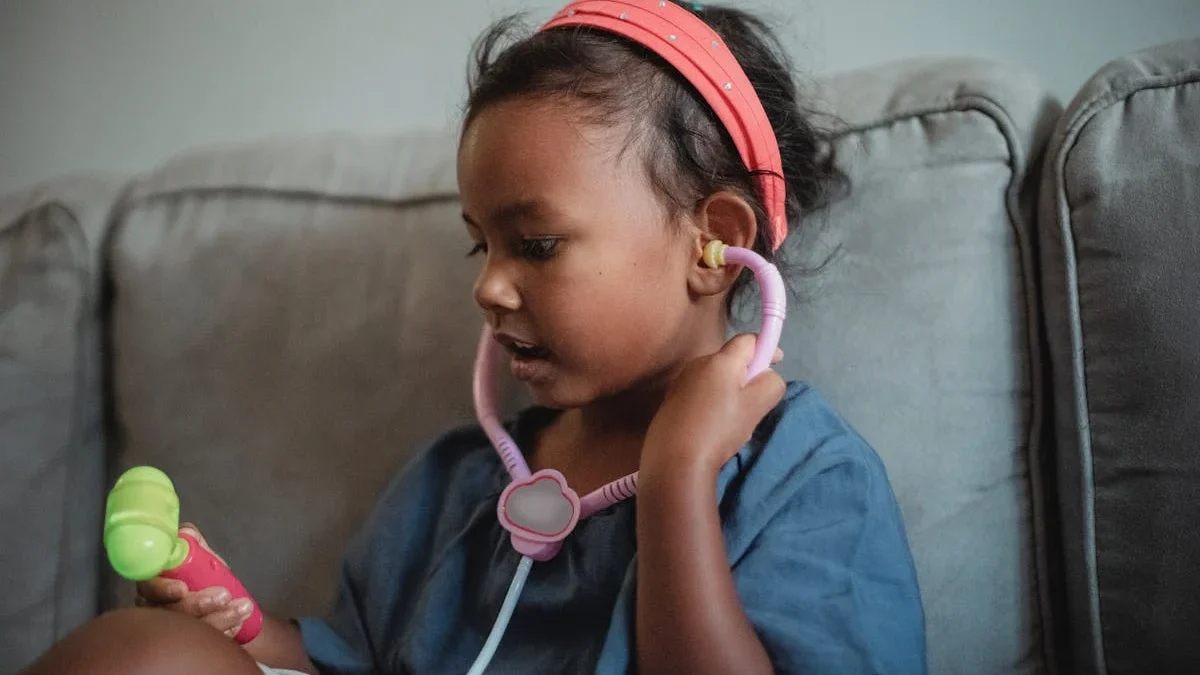
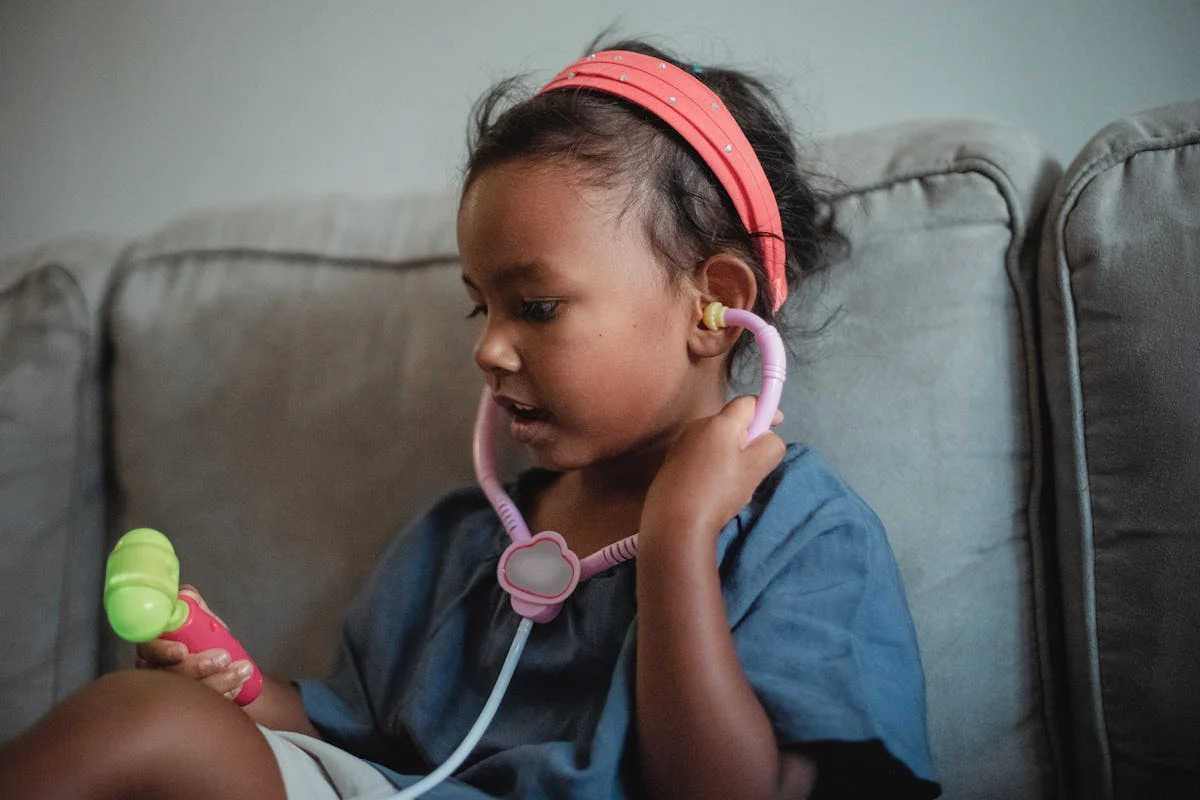
As young children grow, parents can layer in playful learning, medical role‑play, reading stories about emergency services or a weekend demo of calling 000. Simple tasks like pointing out aid kits at home or in shops help them learn where to find what they need.
Even a 10‑minute discussion about first aid needs can plant lifelong awareness. “Playing ‘spot the defibrillator’ in shopping centres,” Amy adds, “is a fun way to familiarise kids without making it scary.”
Sarah proudly mentions that her eight-year-old son can already perform effective CPR after supervised practice. “It’s proof that younger kids really can learn these important skills,” she says. “And knowing what to do helps them feel safer and calmer.”
The most important skill before school
When asked what first aid skill to focus on before school, both women agree: Knowing how to get help. “Calling 000, reaching a trusted adult or running to a neighbour are the top life‑saving skills,” Sarah says.
Amy notes that teaching children to identify safe adults who can help is just as essential.
This foundation matters because in a real medical emergency, there’s little time or mental energy to think. Practice replaces panic. “If first aid becomes part of the daily routine,” Sarah adds, “you remove that mental load; it just comes naturally when needed.”
Empowered kids, safer communities
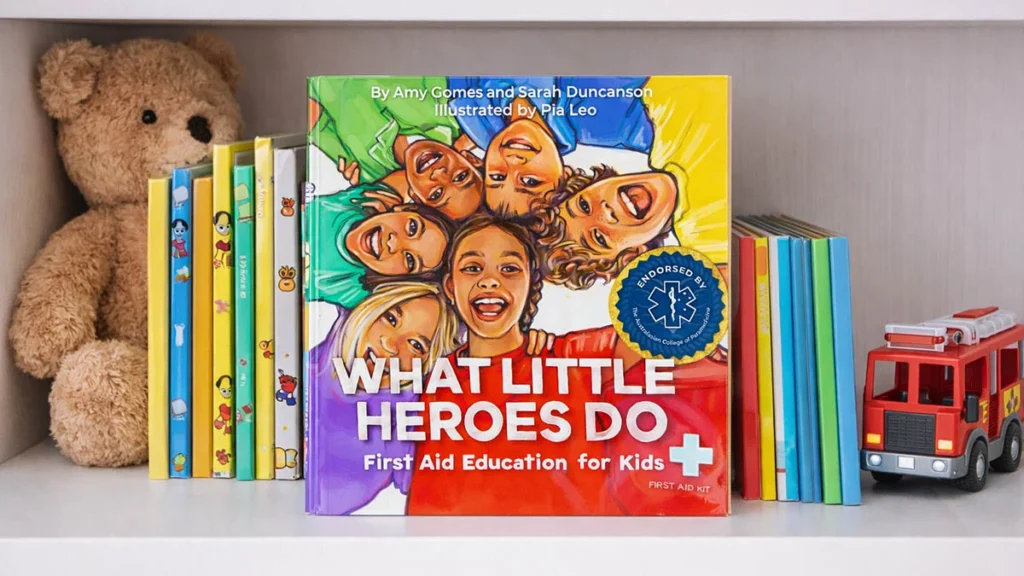
When kids feel confident to take small actions—pressing on an open wound, placing someone in the recovery position or calling for emergency services—they feel safer and more capable.
“Planting those seeds early not only prevents unintentional injuries, but it also gives children the tools to act responsibly,” Amy explains.
For example, spotting a snake and calmly moving away could be the difference between a fright and a life‑saving response.
Amy recalls when researching her first book about paramedics, where she interviewed several EMD (emergency call‑taker) professionals, “they said they liked child callers. They listen carefully, follow instructions and stay surprisingly calm. There were times an adult was told, ‘Can you put the child back on the phone?’ because they were doing better!”
It’s a touching reminder that first aid education can help younger children stay composed even in chaos. They just need someone to show them how.
Raising confident helpers
Despite their book’s title, Sarah and Amy stress that the goal isn’t to turn kids into rescuers. “We don’t want children to feel pressure to be heroes,” Sarah says. “We just want them to feel they can do something useful.”
By embedding first aid concepts early through stories, games and practical routines, parents can give their kids the confidence to respond when things go wrong. The next time a minor injury or emergency strikes, they’ll know they aren’t helpless.
And as Sarah and Amy remind us, knowledge can be life‑saving. Because when children know what little heroes do, they don’t just save others, they help themselves stay calm, safe and strong.
Read next: What to put in a family first-aid kit