

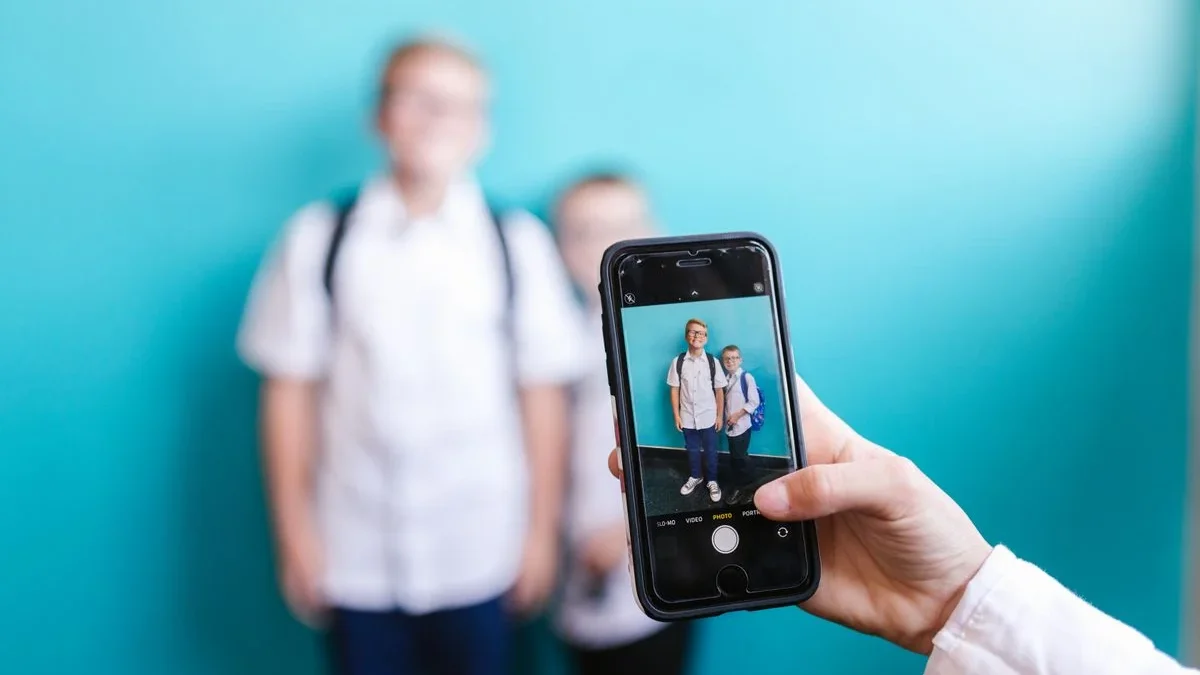
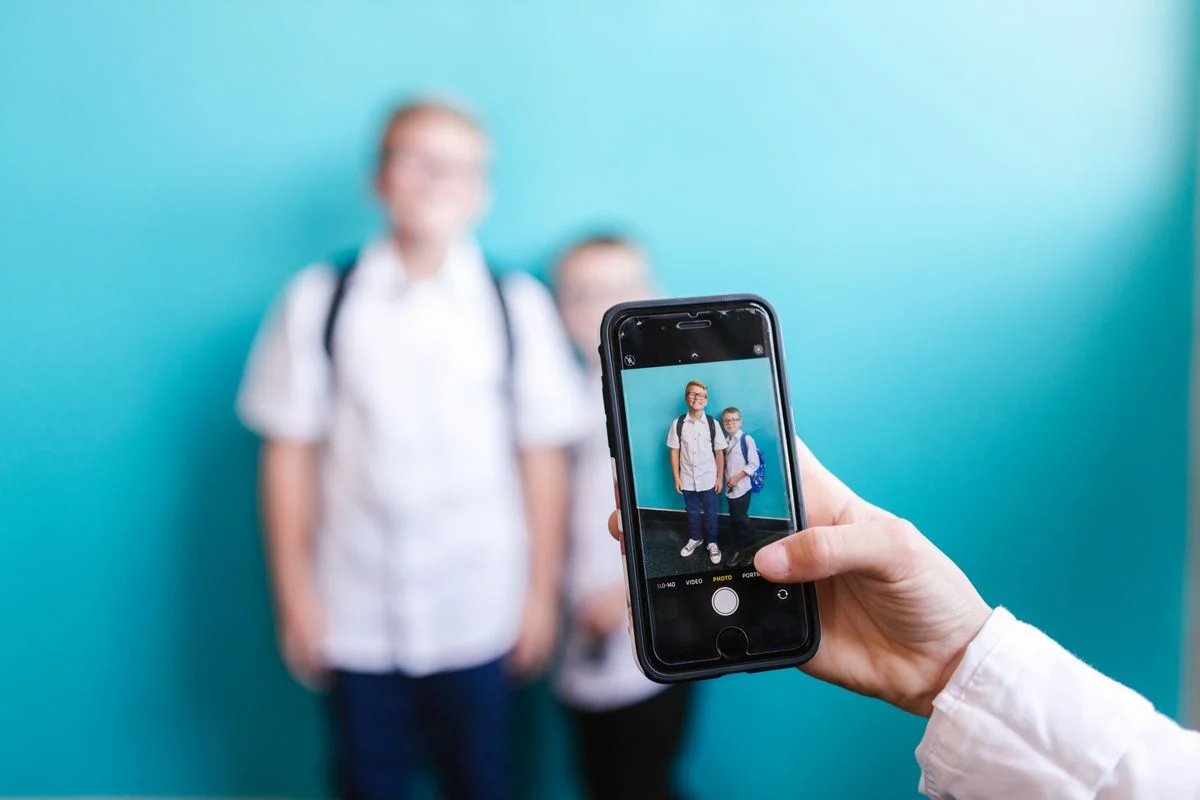
Discover why more parents are ditching “sharenting” to protect their children’s digital privacy and safety.

There was a time when becoming a parent almost seemed to come with an unofficial social media responsibility: Share the pregnancy announcement, post the birth announcement, document the first smile, the first steps, the first day of school, the birthday cake and, of course, the annual photo where your child has somehow grown another five centimetres overnight.
For many parents, this all started as a simple joy of documenting and sharing the highs and lows of parenthood and family life.
But for the average child, growing up in the digital age can mean having their entire lives documented online before they’re old enough to understand what that means.
End of an era?
As the internet has evolved and changed, something else is changing. More parents are starting to ask themselves a question that might have seemed unusual 10 years ago: Does my child really need to be on my social media?
The answer isn’t straightforward. Some parents have stopped sharing their children’s photos altogether. Others have simply become more selective about what they post, who can see it and how much personal information they include.
Plenty of parents are still sharing. But plenty also aren’t.
So, is the sharenting era actually over?
What exactly is “sharenting”?
“Sharenting” is the term used to describe parents regularly sharing information, stories, photos and updates about their children online.
For many parents, it is completely innocent. You might post a photo from your child’s birthday because you’re proud of them. You might share a funny thing they said because your friends and family will love it. You might upload a first-day-of-school photo because it feels like a milestone worth remembering.
Social media can also be a wonderful way to stay connected. Grandparents who live interstate can see how quickly the kids are growing. Family members overseas can feel involved in everyday life. Friends can keep up with children they don’t get to see very often.
For some parents, social media has effectively become a digital family album. The problem is that a traditional family album sits on a bookshelf in your home. A social media post can potentially be seen, saved, shared or copied far beyond the people you originally intended to see it.
That’s why parents are beginning to think twice. Why are some parents sharing less?
1. They’re thinking about their child’s privacy
Today, many parents are becoming more conscious of the fact that their children cannot consent to having their lives documented online.
A toddler can’t tell you whether they want their bath-time photo posted. A five-year-old probably doesn’t understand what it means for their photo to remain online for years. A 10-year-old might not appreciate having an embarrassing story about them shared with hundreds of people.
Parents are increasingly asking: Would my child be comfortable with this being online when they’re older? Sometimes, the answer is enough to make them put the phone away.
This is exactly what one mum, Emily, believes. “I have reservations around consent,” she says. “My daughter is not consenting to these photos being shared as she is not old enough to understand what social media is. Does that make my sharing a violation of her right to choose? Will she be mad in the future that I have shared?”
There’s another side to the conversation that has less to do with physical safety and more to do with identity. Imagine growing up and discovering that your parents have documented huge portions of your childhood online.
Your first tantrum. Your toilet-training struggles. Your embarrassing haircut. Your teenage mood swings. Your worst school photo.
Your parents may have shared these things with affection. But that doesn’t necessarily mean you’ll want them available to other people forever.
Children eventually become young people with their own identities and online presence. Some parents are therefore choosing to give their children something many of us had growing up: A childhood that wasn’t constantly photographed and published.
That’s why online privacy is becoming such an important consideration for parents—not because every post is harmful, but because children deserve the opportunity to have some control over their own stories as they grow.
2. The internet is dangerous
Parents today have seen how quickly something can spread online. A photo doesn’t necessarily stay within your social media circle simply because you’ve posted it to friends. Screenshots can be taken. Images can be saved. Posts can be reshared.
There is also growing awareness around children’s personal information and digital footprints. A seemingly harmless photo might reveal a child’s school uniform, their location, their name, their birthday or the suburb they live in.
None of these things necessarily make a photo dangerous on their own. But when lots of small pieces of information are shared over years, they can create a surprisingly detailed picture of a child’s life. These can be big red flags, especially for bullies or other nefarious characters online who could potentially track where your child might be on a given school day.
Artificial intelligence and deepfakes
There is also a newer concern parents are having to consider: What can happen to photographs once they are online in the age of artificial intelligence (AI). Images can be downloaded, altered or used as source material for AI-generated content without the person’s knowledge or consent.
AI has also made it easier to create convincing manipulated images, including sexually explicit deepfakes. There have been growing concerns about the use of children’s photographs in the creation of sexualised or abusive AI-generated material.
While sharing an ordinary photograph of a child does not mean it will be misused, the possibility highlights another reason some parents are becoming more cautious about what they share online. Once an image is publicly available, parents have very little control over where it may end up or how technology could be used to alter it.
For mum of two, Katie, those concerns have led her to make a more definitive choice: She has decided not to share her children online at all.
“I feel uncomfortable about putting something online, handing over the rights to that image to the platform,” she says. “I even feel uncomfortable about sending photos through iMessage or WhatsApp, because WhatsApp is owned by Meta. Especially with AI, I just really want to protect my children. I know there are predators out there and I don’t want them seeing my children.
“There are certainly times where I want to share this or that online, but it’s not a priority in the grand scheme of things. I want to protect my children from any harm that could take place.
“I also find that social media is such a trap for me and I don’t really post things in general. I have found that social media is a problem in my life with doom scrolling and consuming, and so the less I have of it, the better.”
Katie’s approach highlights another reason some parents are stepping back from sharenting: Sometimes the decision isn’t simply about how safe a particular photograph is. It’s about deciding that sharing children’s images online isn’t worth the potential risks at all. That’s what’s making some parents more cautious and is one of the more uncomfortable reasons parents are reconsidering sharenting.
Loss of control
Most parents aren’t thinking about strangers when they post a cute photo of their child. They’re thinking about Grandma, their friends and the people they know. But the internet doesn’t always work that way. Images shared online can end up in places parents never intended. That’s understandably frightening, particularly when it comes to photos of children.
For some families, the easiest solution is simply not to share publicly. Others choose private accounts, restrict followers or avoid posting photos that show identifying details.
Emily shares how she posts photos of her daughter online: “I mainly use Instagram as a visual diary or record of highlights throughout the year. Our daughter is a central part of our life and makes my heart burst with happiness, so I do have an impulse to share cute, funny moments with her that I want to remember. However, I am mindful that the internet is a vast, largely unregulated place, shared with people of sinister intent. Before I first shared content, I set my accounts to private and did a cull of my followers and friends so I was happy with who would see photos and videos of her.”
Violation of privacy
There are also more serious concerns around online predators, identity theft, child abuse and the potential misuse of children’s information and images.
Stacey Steinberg, a US lawyer and researcher who has written extensively about children’s privacy and sharenting, has highlighted the tension between a parent’s right to free speech and a child’s right to privacy. Parents also need to think about online safety, appropriate social media etiquette and the potential impact that publicly sharing a child’s difficult experiences could have on their mental health.
This doesn’t mean every photograph is a risk or that parents should never share their children’s lives online. Rather, it encourages parents to use privacy settings, think carefully about what they post and consider whether their children would be comfortable with those moments being public when they are older.
For young children especially, protecting their privacy may sometimes mean keeping certain memories offline, even when sharing them would generate plenty of likes, comments and attention.
3. Some parents don’t want to use their kids as bait
For some parents, the decision to share less has nothing to do with fear. It’s about values. Emily says, “Tied up in this is my observation or questions around the morality of influencers whose children drive engagement with their accounts. Are we commodifying our kids by using them to make money? And is giving the rest of the world so much access to their daily lives a violation of their privacy? And if we’re not sharing for monetary reasons like me, my account is set to private and I don’t have that many followers, are our egos tied up in our motivation for sharing? Are we using our kids to pull likes and for our own validation?”
Social media has created an entire economy around attention and children can be incredibly engaging content. A funny toddler moment, a cute sibling interaction or an emotional family story can attract far more attention than an ordinary post.
For influencers and parent creators, that attention can translate into money. More views can mean a bigger audience. A bigger audience can mean more brand deals, sponsorships, affiliate sales and advertising revenue. And suddenly, a child’s everyday life can become part of a business.
Of course, there are parents who genuinely enjoy creating family content and see nothing wrong with sharing their children online. But other parents are increasingly uncomfortable with the idea of turning their child’s life into content, particularly when the child has no real say in it.
They might ask themselves: Am I sharing this because it’s a special memory I want to share with people I love or because I know it will perform well? Those are two very different questions.
Social media can make it very easy to measure our lives through likes, comments and engagement. A post that gets hundreds of reactions can feel like a little boost to the ego. But some parents are questioning whether their children should be part of that equation at all.
There’s also something uncomfortable about the idea of a child being unable to understand why their photo is being shared, while thousands of strangers are watching, commenting and engaging with it.
Plenty of parents still share
It’s important not to turn this into a simple “good parents don’t post their kids” conversation. Because that’s not fair either.
There are plenty of thoughtful reasons parents choose to share. For some families, social media is how they maintain relationships and their social media accounts are private and/or carefully managed.
Some parents also ask their children before posting.
“Can I put this photo on Instagram?” might seem like a small question, but it’s a useful way of teaching children that their image belongs to them too.
And then there are parents who simply enjoy sharing their family life. There’s nothing inherently wrong with that. Parenting can feel incredibly isolating at times, and sharing the funny, messy and beautiful parts of family life can make people feel less alone.
So what does sharenting look like now?
Perhaps the biggest change isn’t that parents have stopped sharing. It’s that they’re becoming more intentional about it.
Instead of posting every moment, they might share one or two meaningful photos. Instead of publicly posting their child’s full name, school and location, they might leave those details out.
Retired police officer George S shared some insights on how to share photos of your kids online while still being intentional about their safety.
“Posting or sharing my kids’ photos online is doable but also comes with risks. The issues become more murky when posting a photo that also has some of my kids’ mates in the photo. For a simple family post, we consider cropping or blurring other children’s faces or limiting the audience to trusted people.”
While Australia doesn’t prohibit taking photos of people in public places, given that it’s generally not a place where people would expect privacy (such as toilets or changing rooms), George reminds us that families and organisations will have their own rules around this. If asked not to include someone in a photo, you must respect that.
He also advises against sharing names, school uniforms, routes, live locations, number plates, home addresses or any information that could identify or locate a child online. Instead of showing their child’s face, they might photograph them from behind, capture their hands holding something or share a family moment without identifying the child.
Some parents have also moved family photos into private group chats or closed accounts rather than sharing them publicly.
There isn’t one “right” approach. It’s about considering what could be the safest approach for both your child and your family, as well as their future self-esteem and identity.
The important thing is understanding that posting a photo isn’t always as simple as pressing upload.
What about children who don’t want to be posted?
This may become one of the most important parts of the conversation as today’s children grow up.
Some children love being photographed. Others absolutely hate it. And some might be happy for their parents to take photos but not want them posted online. Listening to them can teach an important lesson about consent, boundaries and respecting other people’s privacy.
After all, we’d probably expect another adult to ask before posting a photo of us. Why shouldn’t children get the same consideration?
There is no perfect answer
The sharenting debate can quickly become very black and white.
Post your kids and you’re exposing them. Don’t post your kids and you’re overly paranoid.
But real family life doesn’t work like that.
Parents have different families, different relationships with social media and different levels of privacy.
The better question probably isn’t “Should parents ever post their children?” It’s “What are we sharing, why are we sharing it and who are we sharing it with?”
Before posting, it might be worth asking yourself:
- Would my child be comfortable with this being online when they’re older?
- Does this photo reveal more personal information than I realise?
- Would I be happy if this image was saved or shared outside my intended audience?
- Am I sharing this because it’s meaningful to my family or because I feel pressure to document everything?
- And perhaps most importantly: Does my child have a say?
There may be another question worth asking: What does it mean for a child to grow up knowing they are constantly being photographed and documented?
Emily shared, “I also question whether the act of documenting so much of our kids’ lives is taking away their ability to just be and do unobserved, without the awareness that someone is watching them. I have read that when kids realise this, it can change their brain state from a state of engaged flow, to a self-conscious performative state, however I think this is theoretical and not yet researched. I do wonder if we are setting them up to seek external validation. There’s no research to tell us yes or no yet because we haven’t shared our kids like this before or for long enough.”
It’s an interesting question, particularly as today’s children are growing up in a world where being photographed, recorded and shared can feel like a normal part of everyday life.
There isn’t enough research to say that sharenting causes children to become more self-conscious or seek external validation. But it does raise another question for parents: Do children deserve some spaces where they aren’t being watched, photographed or documented for an audience?
Perhaps that’s part of what this shift in sharenting is really about. Not necessarily removing children from social media altogether, but recognising that they are people with their own identities, boundaries and futures, and that the stories we share about them today may still belong to them tomorrow.
So, is the sharenting era over?
Probably not. Parents aren’t suddenly going to stop taking photos of their children. Nor should they.
Childhood is full of moments worth remembering. But perhaps we’re entering a different era of sharenting, one where parents pause before posting rather than automatically reaching for their phones.
The goal doesn’t have to be avoiding social media altogether. It can simply be being more thoughtful about the digital footprint we create for our children before they’re old enough to create one themselves.
One of the biggest questions new parents are beginning to ask is what happens when their children’s photos, real names and personal information are shared online and remain there for years to come.
A child’s entire life can potentially be documented through social media posts, from children’s milestones and family holidays to difficult moments that they may later wish had stayed private. As children grow, those posts could potentially be seen by future employers, schools or other people in their real life.
This is why children’s privacy, online privacy and children’s rights are becoming an increasingly important part of the conversation around social media platforms. The issue isn’t about telling parents they can’t share their child’s life, but about considering whether a young child should have their story decided for them before they are old enough to have a say.
One day, our children will grow up and inherit the online stories we’ve created about them. Maybe the greatest gift we can give them isn’t a perfectly documented childhood. Maybe it’s leaving some parts of childhood just for them.
Read next: Cyber safety: Keeping your children safe from predators
Why some parents are rethinking their kids’ social media presence