

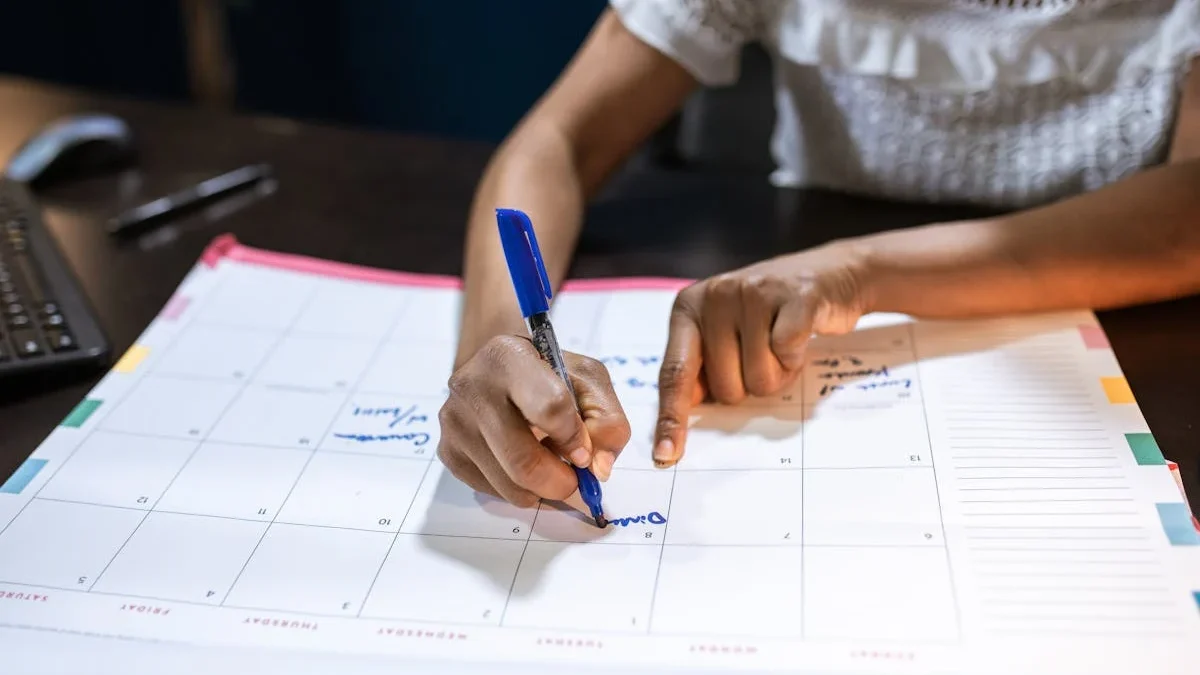
Between sport, tutoring, music lessons and birthday parties, are we over-scheduling our kids? What might they really need instead?
Music lessons before school. Sport straight after. Homework. Screen time. Dinner. Bed. Rinse and repeat. Many kids today move from one adult-led activity to the next, rarely experiencing true free time and almost never having space to simply . . . do nothing.
But what if that “nothing” is actually everything?
What if boredom, the thing we rush to fix, is the very thing that helps kids become creative, capable and effective people?
Micromanaging time
As parents, it’s easy to feel like we’re doing the right thing by offering constant activities, enrichment and structure. We want our kids to be happy, skilled, social and successful. No parent sets out thinking, I want my child to feel overwhelmed.
And yet, many children today rarely experience unstructured time. They’re told where to be, what to do, how to do it and when to move on. Even their “downtime” is often curated video games, a TV series or scrolling on the best websites.
The unintended consequence? Kids don’t get much practise thinking for themselves.
When children are always externally directed, they don’t develop the internal skills needed to decide:
- What do I enjoy thinking or creating when I have nothing on?
- How can I use this moment best?
- What interests me right now?
- How am I feeling?
- What am I enjoying about life?
Those questions are the foundation of creativity, confidence and critical thinking.
Boredom is a starting point
Boredom has developed a bad reputation. Parents often hear “I’m bored” as a cue to jump in with solutions: Suggest board games, organise a game night, offer books or plan something “fun”.
But boredom isn’t a failure of parenting. It’s a doorway.
Albert Einstein famously said that creativity is born from quiet moments: Boredom is the birthplace of creativity. When the mind isn’t constantly stimulated, it starts to wander. And wandering minds create ideas.
A bored brain begins to look for stimulation internally. Kids invent games. They build worlds. They daydream. They combine random thoughts into something new. This is how creative muscles are built.
And creativity isn’t just about art, it’s about problem-solving, innovation and adaptability. The very skills we want our children to have in life.
Over-scheduling and independence
Stephen Covey, in The 7 Habits of Highly Effective People, discusses effectiveness, responsibility and leadership. One of his key ideas is that micromanagement and over-control reduce effectiveness, while delegation builds capable, confident individuals.
The same applies to parenting.
When adults manage every detail of a child’s time, children never learn to manage it themselves. When they’re constantly told where they need to be and what they need to do, they don’t develop initiative. When adults solve boredom for them, kids don’t learn how to self-direct.
This is how well-meaning parents accidentally raise kids who struggle with:
- decision-making
- resilience
- managing uncomfortable feelings
- using undivided attention
- coping without constant stimulation
Being an effective person, child or adult, requires practise in self-direction. And that practise starts in moments of nothingness.
Childhood used to look very different
You probably remember a time when there was no internet, social media or even video games. It wasn’t in the not-so-distant past. Kids had far more unscheduled free time. They spent hours outside getting fresh air, exploring, climbing, wandering and making up games with friends. They read books, started collections, tried a new hobby or worked on a messy DIY project with no “mature” outcome in mind. They were just living as kids, exploring and learning.
Bored afternoons led to:
- inventing rules for imaginary games
- organising a book club with neighbourhood kids
- experimenting with a new recipe
- building forts
- learning through trial and error
Sometimes, kids did nothing particularly productive and that was okay. Childhood wasn’t optimised for performance. It was lived.
Today, boredom is often treated as a terrible idea, something to be avoided at all costs. But in trying to eliminate it, we may be removing one of childhood’s most valuable teachers.
What kids learn when we let them be bored
When children are allowed space, real space without entertainment fillers or schedules, powerful things can happen.
They learn how to:
- manage free time without external input
- listen to their own mind
- tolerate quiet and uncomfortable feelings
- move from boredom into curiosity and innovation
- create their own good times
Some kids will turn to books. Others will start a gratitude journal or sketch a vision board. Not every moment will be meaningful. Some will be messy, dull or repetitive. But that’s how learning works.
And yes, sometimes boredom leads to silliness, staring into space or doing absolutely nothing. That’s not wasted time. That’s mental rest. That’s stress relief. That’s protection for mental health.
“Won’t they just go on screens?”
Screens are often the fear that drives over-scheduling. Parents worry that if kids aren’t busy, they’ll default to video games or endless scrolling.
But here’s the thing: When screens are the only option for downtime, kids cling to them. When boredom is allowed and screens aren’t the automatic solution, children eventually look elsewhere.
The goal isn’t to eliminate screens entirely. It’s to stop using them as the instant fix for boredom. When boredom is respected instead of rescued, kids learn to self-regulate.
They learn that boredom passes and something interesting usually follows.
Perhaps you could take a leaf out of their book and think about what you do when you’re bored? Are you gravitating straight to a screen? Or are you open to a walk outdoors, picking up a pencil and paper or rediscovering an old hobby?
Raising creative, capable humans
If we want kids to become innovative thinkers, adaptable adults and effective people, we have to let them practise those skills now.
That means resisting the urge to fill every gap. It means allowing boredom without guilt. It means trusting that kids can handle unstructured time.
The best thing we can sometimes give children isn’t another activity, lesson or experience. It’s space.
Space to think. Space to explore. Space to be bored.
Of course, there will be times when they want you to come and spend time with them, or they might want you to watch while they show you something they’ve learned. Bonus points if you’re invited into their new hobby. Memories being made, fun being had and lots of new skills. You never know what conversations you might have.
Because in that boredom, children discover who they are, what interests them and how to create meaning out of nothing. They learn how to process thoughts and sometimes share those thoughts. Life skills, learnt through boredom, can be some of the best and last a lifetime.
Read next: 4 simple ways to manage screen time for kids
Are we over-scheduling our kids?