

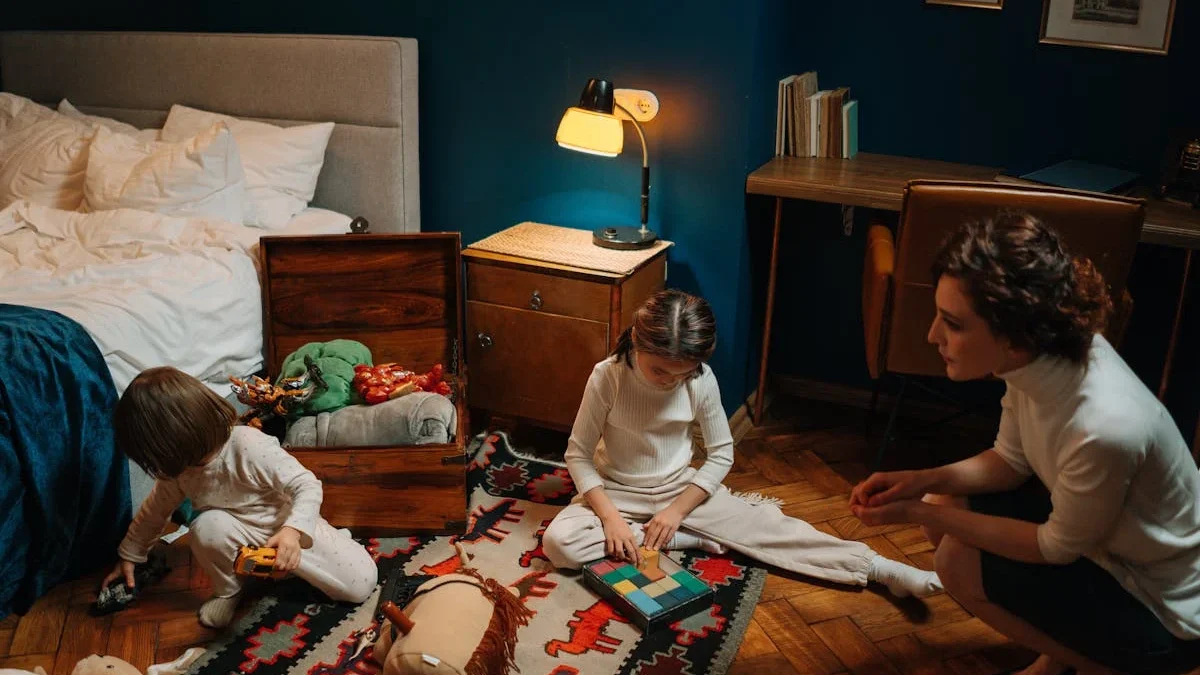
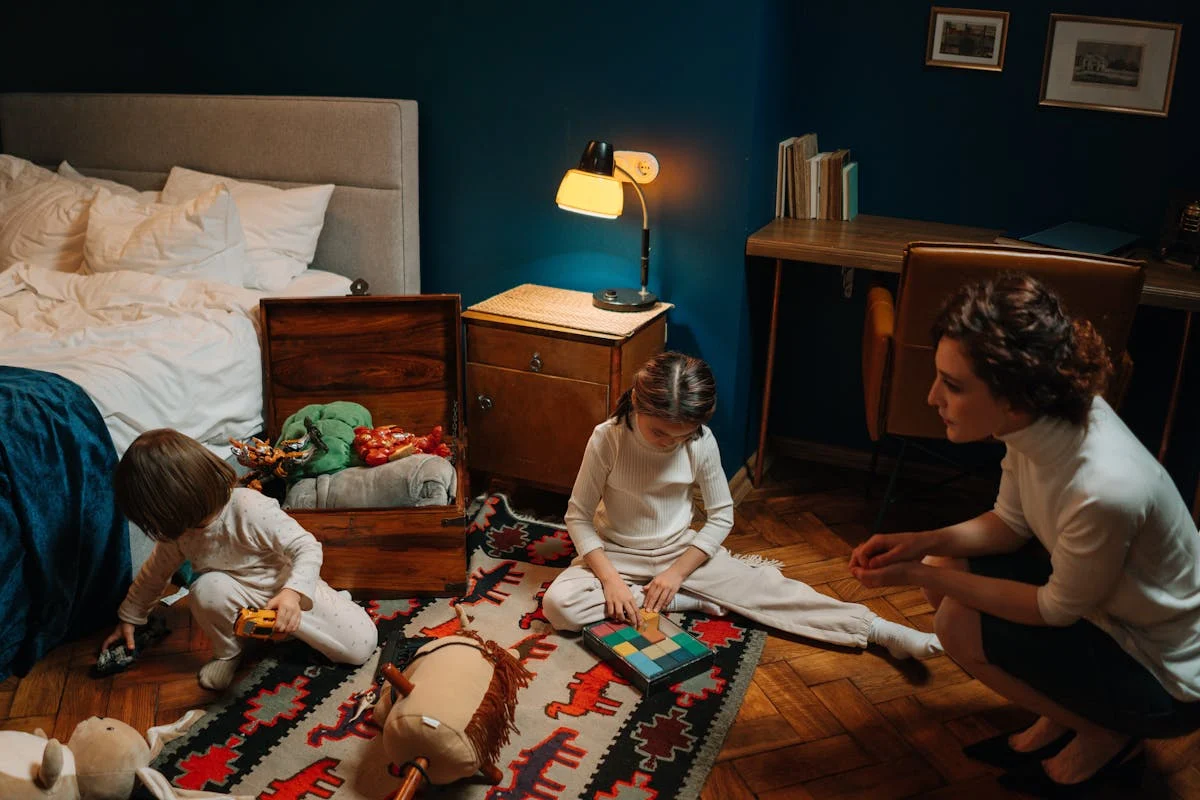
The honest reality of the evening chaos and the simple shifts to help your kids settle down so you can actually sit down.

Is this a typical night? You’re exhausted, your kids are bouncing off the walls and no matter what you do, they just won’t go to sleep. The battle can feel endless. Bedtime resistance, night wakings or night terrors are real and they can leave even the most patient parents feeling frustrated.
The good news? You’re not alone and there are practical strategies to help your family reclaim bedtime. Here’s how to make evenings calmer, smoother and more predictable.
Understanding why kids resist sleep
Before we dive into solutions, it helps to understand why kids fight bedtime. Younger kids and toddlers often struggle with their circadian rhythms: Their internal clock does not always match yours.
Kids and adults have wakeful and sleepy ultradian rhythms throughout the day. These rhythms last about 90–120 minutes each. For example, you might notice a wave of tiredness at 8pm, but if you push through it, it might not come back until 9.30pm. That’s your ultradian rhythm. Your kids have it too. The trick is to catch them before that infamous second wind.
At the end of a busy day, kids often resist sleeping because they have been going through some level of separation anxiety, being away from you all day. This can be especially bad if they have a new sibling or if something stressful has happened during the day. Often, they need time with you to relax, destress, wind down and talk about their day before they can go to sleep.
Older children and school-aged kids can also resist sleep due to inappropriate use of screen time. Exposure to screens close to bedtime can interfere with melatonin production, the hormone that signals to the body that it is time to sleep.
Other factors, such as nighttime fears, night terrors, bad dreams or even a stuffed animal that needs to be just right, can trigger sleep disturbances. Understanding the root of your child’s sleep problems is the first step to solving them.
Create a consistent bedtime routine
One of the most effective ways to prevent bedtime chaos is by working hard to have not only a regular bedtime routine, but a consistent day routine that includes lots of outdoor physical activity. Kids thrive on consistency. Even toddlers benefit from knowing what comes next. A simple, predictable sequence can make all the difference.
For example:
- Bath or shower
- Pyjamas and brushing teeth
- Story time with a stuffed animal
- Quiet conversation, reflection on the day
- Lights out
This sequence cues your child’s internal clock that bedtime is approaching and helps reduce bedtime resistance. But if you just spring it on them, “Bedtime in 5 minutes”, they may protest because none of the cues has happened and they haven’t had a chance to wind down.
Adjust bedtime to match your child’s needs
Sometimes, the answer isn’t stricter rules; it’s an earlier bedtime. When kids are overtired, they can actually have a harder time falling asleep. Look for signs they’re ready for bed, like rubbing their eyes, yawning, losing interest in play or getting easily upset.
For older children who tend to stay up late, try bedtime fading. Move their bedtime earlier little by little, about 10 to 15 minutes every few nights, until they’re going to sleep at a better time.
Manage nighttime anxiety and fears
Nighttime anxiety is common, especially in younger kids. Night wakings or requests for comfort can be disruptive.
Practical strategies include:
- Use night lights to help your child feel safe
- Keep a quiet environment in the bedroom, free of electronic devices
- Reduce stress as much as possible at home
- Introduce a reward system for staying in bed or falling asleep independently
- Never shame your child for needing comfort during fearful sleep events
If your child experiences night terrors, remember that these are usually brief and not consciously remembered. Comfort them as needed, but avoid overstimulation.
Limit screen and media use
Electronic devices and video games are major culprits of bedtime problems. The blue light emitted from devices suppresses melatonin, making it harder for kids to feel sleepy.
Practical tips:
- Turn off all media use at least one hour before bed
- Replace screen time with calm activities like reading, puzzles or quiet time in the living room
- Avoid high-sugar snacks in the evening as they will cancel out sleepiness
Sleep encouragement
For toddlers and younger kids, techniques like gradually reducing your presence in the bedroom or using a “bedtime pass” for one last request can help.
Consistency is key. If your child gets up repeatedly, calmly guide them back to bed without engaging in lengthy conversations or games. Over time, they will learn that bedtime is non-negotiable.
Handle bedtime problems with practical strategies
Here are some common reasons children refuse to go to sleep at bedtime and what you can do about it.
Lack of physical activity
Children need opportunities to move. Encourage play and movement during the day to help them feel tired naturally.
Separation anxiety
Leave a personal item in their bed, like a parent’s T-shirt or a stuffed animal.
Bedtime resistance
Offer choices, like which pyjamas to wear or which story to read. This gives a sense of control without compromising bedtime.
Over- or under-sleeping
Track sleep duration and adjust naps, ensuring long naps don’t interfere with nighttime sleep. Avoid letting kids stay up too late to try and make them tired or letting them sleep for an excessive amount of time (unless they’re unwell and need extra sleep). Too much or too little sleep doesn’t help with a sleep routine and often makes it harder to slip back into rhythm.
Circadian rhythms
Some kids are naturally early risers, others need a slightly later bedtime. Work with their natural rhythms rather than forcing an unnatural schedule. Use cues like natural light exposure in the morning and quiet time in the evening to reinforce their internal clock.
Coping with sleep challenges
Remember, occasional night wakings, bedtime problems or sleep terrors are normal. If your child has persistent sleep-disordered breathing, consult a paediatrician. Otherwise, consistent routines, sleep training and a calm approach usually work wonders.
Practical takeaways
- Create a consistent bedtime routine with predictable steps
- Adjust bedtime to your child’s natural internal clock
- Reduce screen time and electronic devices before bed
- Use night lights, stuffed animals and other comfort items to ease nighttime anxiety
- Make the sleep environment peaceful and cosy
- Encourage healthy daytime habits, movement, naps and balanced meals
- Reward positive bedtime behaviour
- Stay patient. Bedtime battles are normal, but consistency wins in the long run
- For more persistent struggles, consider professional support for sleep disorders
Bedtime doesn’t have to be a battlefield. With the right mix of routine, consistency and gentle guidance, even the most resistant children can learn to sleep peacefully. As a parent, taking small, practical steps each day can turn bedtime chaos into calm, restful nights for you and your kids.
If it’s been a long time since your child has had a sleep routine, it will take longer, but most issues usually clear up within a few weeks. For kids who are getting older, sleep can be one of those power struggles, but it might be as simple as them trying to gain more independence. With a little understanding and communication, you can both come up with something that works for everyone.
Remember, you’re not alone. Many parents face the same challenges and with patience, creativity and persistence, you can reclaim your evenings. If you have any serious concerns, it’s always a good idea to seek professional support.
Read next: 6 bedtime routine tips