

The 6-7 phenomenon is taking over the world—frustrating and bewildering anyone born before the year 2010. Yet, there may be a silver lining.

If you are a parent, let me guess the type of photos you have stored in your phone. Eighty per cent will likely be pictures of your children. Another 10 per cent may also include your partner. Seven per cent will be random out-of-focus shots and selfies taken by said children. The last three per cent will be “your” photos and I’m not talking about pretty flowers or scenery, but shopping lists, receipts or anything to do with whatever is on your mental load.
Am I close?
As I tend to travel semi-regularly for work, part of my camera roll also includes photos of interesting things I see when I’m out-and-about. Photos that I can share with my family, especially my son, when I’m back home, telling them about my “adventures”.
On my last work trip, my colleague pointed out some of the beautiful springtime flowers in the garden we were in. “Are you going to take some photos of these to share with your son?” he asked.
“Nope,” I answered because what I had stored in my phone on that trip was something far more exciting (for my son) and boring (for me): The numbers on the motel room doors we were staying in.
Numbers that displayed “6” and “7”.
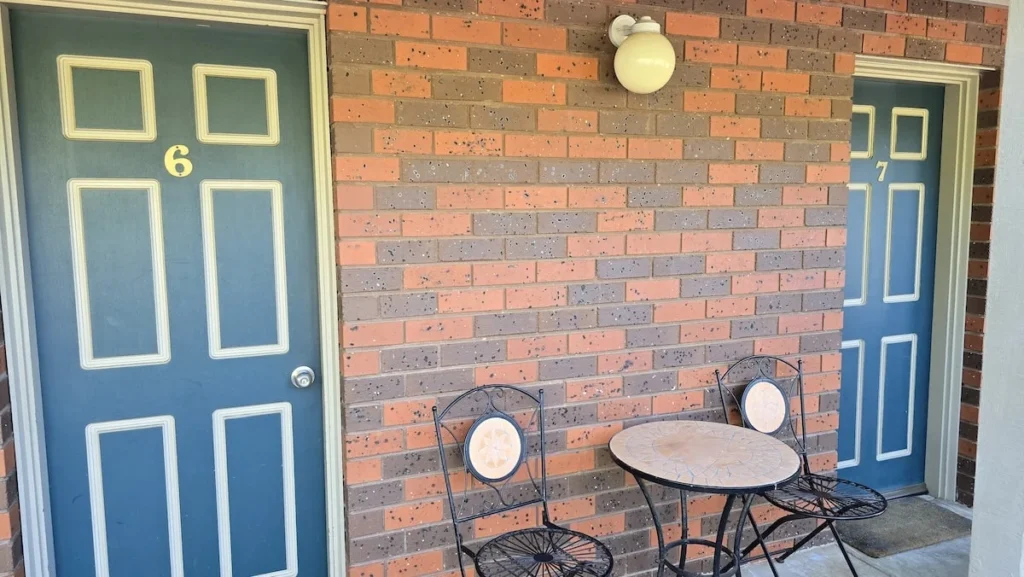
My son loved it.
The origins of 6-7
If you have school-aged children, chances are you’d have heard them randomly shout, “Six-seven!” Sometimes this is accompanied by two upturned palms alternately rising and falling, like weighing scales. And if they happen to see anything bearing those two numbers, there will be loud exclamation and great excitement, like as if you’ve just declared they never have to attend a day of school ever again.
In the grand tradition of words like cap and skibidi, and the entire Italian brainrot characters, Gen Alpha has once again managed to completely baffle their parents with yet another seemingly meaningless trend.
The origins of these two consecutive numbers our offspring learned before they even attended school can be traced to the 2024 rap song “Doot Doot (6 7)” by Skrilla, but I don’t think many kids know that. (It’s not even a particularly catchy song and I think I heard the phrase all of two times. I could hardly make out any of the other words but by the looks of the music video, it probably isn’t anything we’d actually want our children to be listening to.)
Its popularity and virality however, is thanks to (surprise, surprise) a TikTok video featuring NBA basketball star LaMelo Ball, who is 6 feet 7 inches tall. The rest, as they say, has become meme history.
Such is its widespread use, some schools are threatening to ban the term while others are using it to encourage children to read: “How many nights per week should you be reading? 6 – 7” a digital billboard declares out the front of one US school.
The bewilderment that is the 6-7 phenomenon
Getting my son to flip to page six, seven or 67 of a book comes with a predictable “Six-sevvuhnn”, a cheeky smile and a mischievous glint in his eye. So I can imagine how disruptive 20 kids yelling out “Six-seven!” can be when you’re trying to teach, especially if it’s during a maths lesson and those numbers need to be used.
When he first started paying such close attention to those numbers, I have to admit I reacted with either an eye-roll, a sigh or both combined. It’s nonsensical, pointless and to be honest, not that funny.
Yet, that day when I was checking into the motel and the receptionist told me, “You’re in rooms six and seven”, I couldn’t help but smirk. My heart rate increased as I too started getting excited, and I longed for my son to be there next to me, so that I could see his eyes light up as he declared “Six-sevvuhnn” as I know he would.
In case you’re thinking I just had a bad case of homesickness, I should point out I had left home that very morning and would be back the next evening. It wasn’t a terribly long time to be apart and as an introvert, I was actually looking forward to some alone time in the motel room that night.
Thankfully, the workmate I was travelling with has children too and so could share in my bewilderment at the excitement over the rooms we were assigned. And yes, he has the very same photo of the motel room doors on his phone too.
What 6-7 means for belonging and connection
Children crave a place where they belong, to connect with their primary caregivers and feel they matter. Parenting expert Dr Justin Coulson goes so far as to list it as one of the three basic psychological needs children have.
One of the easiest ways to create this sense of belonging, where children know they are seen, heard and valued, is to spend meaningful time together. Family traditions do just that. “Family traditions help life make sense to our children. Like routines, they provide predictability and a sense of security and safety. Family traditions help children feel as though they fit in somewhere,” writes Dr Justin.
Tradition sounds like a grand word, but family traditions don’t have to be. They simply have to be something you do together as a family that everybody comes to expect. “6-7” can help with that and I don’t mean you have to have six or seven family traditions. Instead, it works more like an inside joke.
Think about the conversations you have with those you are closest with. Think about the times when someone says, “Remember when . . . ” or makes reference to a seemingly innocuous phrase, and both of you erupt into laughter. You know exactly what the other person is referring to, and they’ve only said it in less than five words. Yet, the feeling of warmth, joy and connection is unmistakable. Any other person would have no idea what you were talking about.
Inside jokes “are more than just punchlines—they’re psychological glue. They connect us through shared history, mutual trust and the comfort of being ‘in on it’. In a world that’s increasingly fragmented and superficial, inside jokes offer something rare: belonging,” writes Dr Lindsey Godwin in Psychology Today.
Yes, “6-7” is more like a global joke than an inside one, but family traditions don’t have to be unique. Sharing the excitement of “6-7” with our children is an opportunity for connection. When I showed my son the photo I took on my work trip, it wasn’t just about the numbers. It was my way of telling him that he mattered, that what he’s interested in is interesting to me too, that I’m thinking of him, that he belongs.
6-7 and the future
To be honest, my husband caught on to this far earlier than I did. While I was still doing my eye-rolling and my best to ignore loud yells of “6-7”, my husband was right there with my son. My son would point out “6-7” and my husband would heartily laugh, or vice versa. Sometimes, the two of them would even call out “6-7” in unison, hand gestures and all.
The beauty of this entire exercise lies in the look they exchange as they’re doing it. In that split second when they make eye contact, there is a torrent of love, acceptance and connection. They are on the same wavelength.
The trend that is “6-7” will soon be replaced by something equally inexplicable. By then, my son will be closer to an age where friends will hold far more importance than his family, where we may not be the first people he thinks about when something significant happens in his life. The demands of “Mummy, look at me” or questions of “Are you watching?” will start to wane.
I can only hope that it’s through the traditions that we build now, the connections that we make now, that we cement this fact in him: No matter what happens, he will always belong with us. We will always be his safe harbour.