

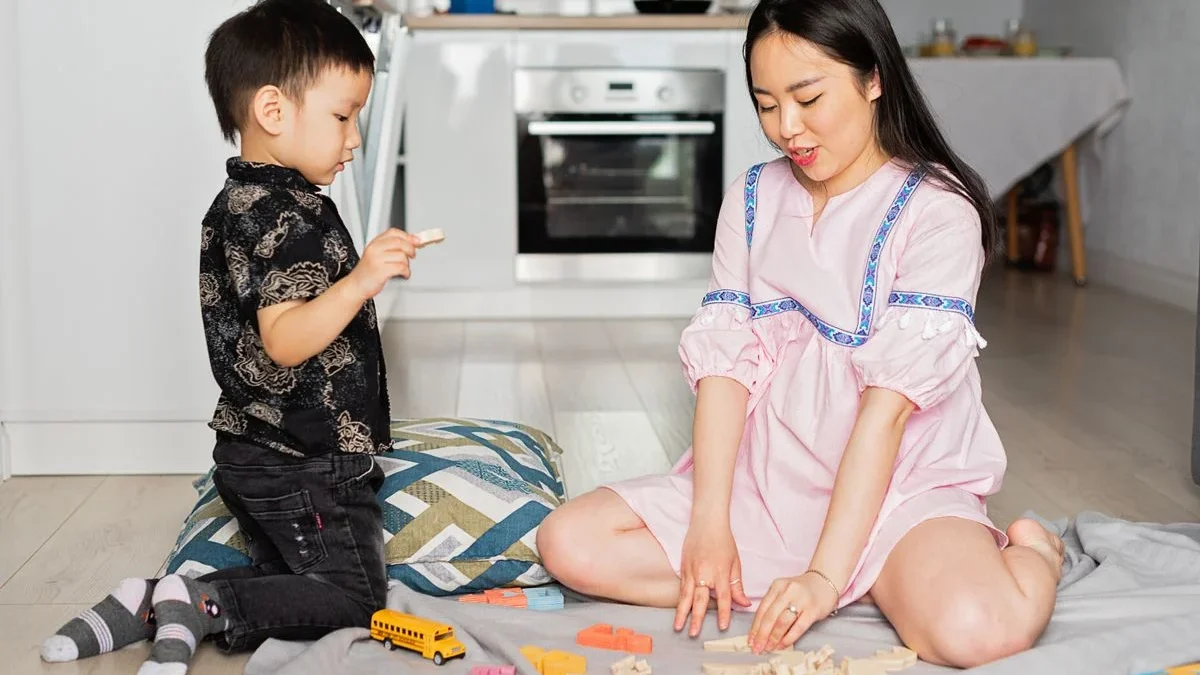
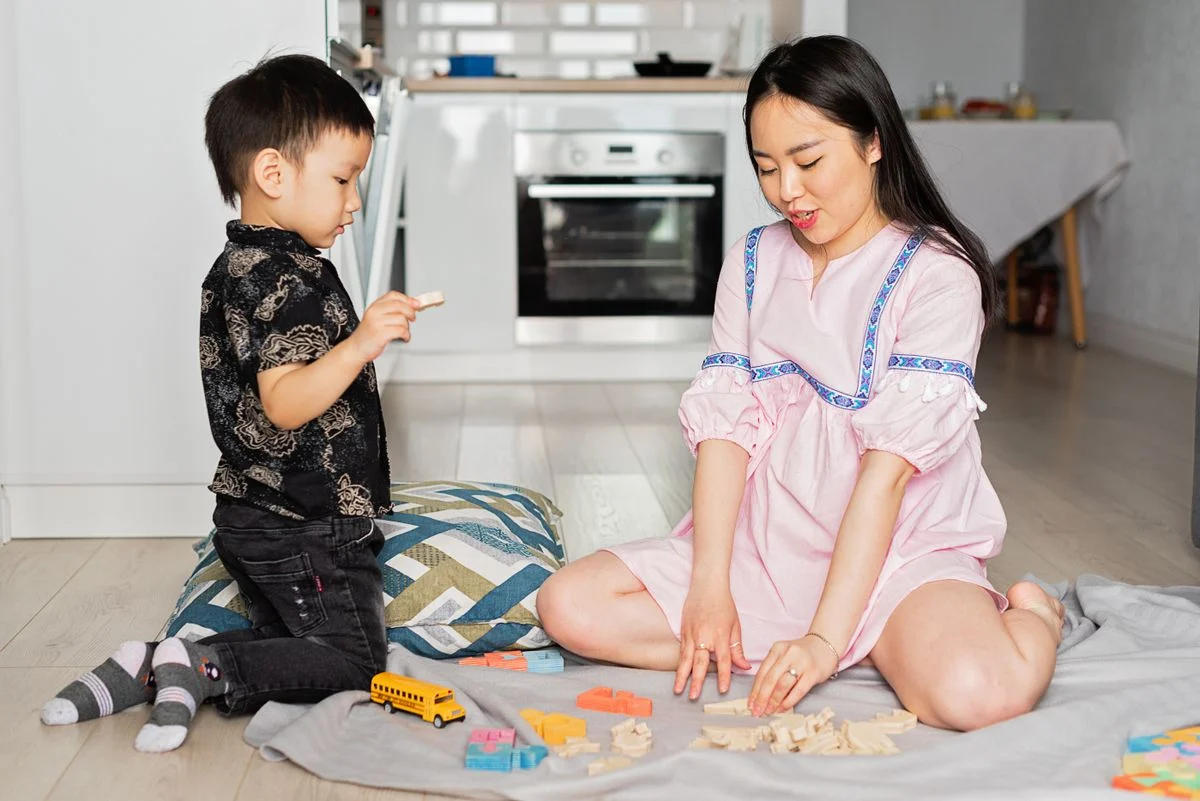
If you’ve ever hidden in the kitchen or bathroom a little longer than necessary, wishing someone else would take over playing with your child, you’re far from alone.

Lots of mums don’t enjoy playing for a variety of reasons, but admitting that they don’t really love playtime often feels taboo. Society often paints a picture of the perfect parent who happily spends hours on the floor playing dolls, superheroes or tea parties, but the reality is much more complicated.
The good news? Not loving every minute of playing with your children doesn’t make you a bad parent or a bad person. What matters most isn’t whether you enjoy every game; it’s how you build connection over time.
To explore this topic, I spoke with four mums who were honest enough to share what many parents are really thinking.
Katie, 33 years old (mum of two under five)
“I think it’s okay to admit that you don’t like playing with your kids. Sometimes when I don’t enjoy playing, it’s not that I don’t enjoy spending time with them; it’s more that I’m just finding it hard to engage and connect on their level.
“Sometimes it’s hard to get into the things that they’re interested in. Playing kitchen, football or whatever their imagination is on at the time. Some games I find difficult getting into, like role-playing. But it’s important for me that my daughter is able to distinguish that I enjoy her but not the game we’re currently playing. I’m an adult and I have different interests, and it can be hard getting into the same game over and over again.
“Sometimes when I’m really exhausted in a game with my child, it’s usually because I need someone to pour into me a little, like having some adult time or having a rest.”
Meghan, 36 years old (mum of a newborn and toddler)
“Most of the time I don’t enjoy playing with my kids, and I think it’s because at this stage of parenthood you’re overstimulated, over-touched and just wanting peace and quiet. When you get five minutes to yourself to do something that isn’t kid-oriented, they usually come to you and ask for Mum to play.
“I know it’s just a season and it will get better, but the sleep deprivation with a newborn and a toddler who wants to play makes for a very tricky time. It’s a crazy wild ride.”
Jess, 42 years old (mum of an eight-year-old and 11-year-old)
“I’m definitely a mum who finds it hard to play with my kids and it’s something I do more as a ‘duty’ than a pleasure. And I don’t have any problem saying this to other mums.
“Having said that, once I’m into playing with the kids, I don’t mind it. For example, it’s fun to play hide-and-seek or build with Duplo or LEGO together. While I find it hard to get excited about playing with my kids, it is something I’ve purposefully done, as I know they enjoy it and that’s worth it.”
Beri, 33 years old (mum of a six-month-old and a three-year-old)
“I’m always telling my sister-in-law how much I don’t like playing with my kids and she’s like, ‘Same!’ I feel like it might be the rare mum who genuinely loves playing with her kids all the time. I do like connecting with them and I do like playing with them for small increments of time, but if I have to sit down on the floor for hours at a time or all day long, it will drive me absolutely bonkers.
“Before I had my second child, I would play with my son for hours every day and never deny a request to play, and he was not great at independent play, so I felt I had to. But since I had my second child, I had to let go of that. With him turning three now, his independent play skills are improving, so he can play by himself all day now. But I still play with him while the baby is napping because I believe the research on parenting really emphasises that collaboration requires connection. So the more connected you are to your kids, the more likely they are to be obedient and responsive to your requests and likely to want to do the right thing. I have definitely found that to be the case.
“I’ve found when I haven’t spent time with him and played with him, he’s much more defiant and likely to have a tantrum. I’ve read that children’s love language is play, so I do try to play even though I don’t really like it. There shouldn’t be any judgement around not enjoying playing with your kids though; we’re adults with adult needs.
“Obviously, it’s great to connect with your inner child and indulge in play, but I also think that if that’s all you’re doing, you’re suppressing a part of yourself that needs more than just playing all day and it can take away your joy a little bit. You need to do things that also fill your cup.”
You’re not alone
Many parents simply don’t enjoy getting involved in imaginary play. Adults naturally think differently from children. Children can turn a cardboard box into a spaceship. Adults see recycling. Kids can happily repeat the same game 20 times. Adults often crave novelty or feel pressure to complete household jobs. That doesn’t mean you’re disconnected from your child. It simply means your brain works differently.
Instead of being hard on yourself, it’s important to do your best, balancing both connective moments of play and then recharging moments with yourself doing something that fills your cup.
Why play matters so much
Even if parents don’t love it, playtime has enormous benefits for children. Play supports child development in almost every area. During imaginative play, children develop:
- language skills
- emotional regulation
- creativity
- empathy
- social skills
- confidence
- resilience
- problem-solving skills
Playing games also teaches patience, taking turns, handling frustration and coping with disappointment.
Research has consistently shown that children learn best through meaningful play experiences rather than simply being told information. Whether they’re building a fort, acting out a story or inventing rules for a new game, they’re learning far more than most adults realise.
Play also gives parents a unique window into their child’s world. During children’s play, kids often work through worries, test out ideas and recreate situations they’ve experienced in everyday life. A child who has started school might pretend to be the teacher. Another might act out a visit to the doctor or recreate a disagreement with a sibling. These moments can offer valuable insight into what’s happening behind those little smiles.
When parents join in, even for a short time, they’re stepping into their child’s world rather than asking their child to step into theirs.
Connection matters more than performance
Here’s the reassuring part: Children aren’t usually judging how imaginative their parents are. They don’t need Oscar-worthy acting or elaborate storylines. They simply enjoy having Mum or Dad nearby, showing interest in what they’re doing.
For young kids especially, even 10 or 15 minutes of focused attention can fill their emotional cup. Sitting on the floor, following their lead and putting the phone away can have a much bigger impact than spending an hour half-listening while mentally running through tomorrow’s to-do list.
Quality almost always beats quantity.
What if you really don’t enjoy playing?
If pretend play feels like torture, don’t force yourself to become someone you’re not. Instead, look for activities that feel enjoyable for both you and your child.
If your child wants to play shops, perhaps you can be the customer for five minutes before suggesting a real snack break together.
If they love building with blocks, challenge each other to build the tallest tower rather than creating an elaborate fantasy world.
If sitting on the floor isn’t your thing, head outside. A walk around the neighbourhood, kicking a football, collecting leaves, blowing bubbles or having a dance party in the backyard are all forms of play.
Many children are just as happy helping with real-life jobs. Mixing pancake batter, washing the car, planting herbs in the garden or sorting socks can become playful moments full of conversation and laughter.
The goal isn’t to entertain children every waking minute. It’s to create opportunities to connect.
Easy ways to join in without feeling drained
If you’re not naturally playful, these simple ideas can make joining in feel less overwhelming:
- Set time limits. Tell your child, “Let’s play together for 15 minutes”, then give them your full attention during that time.
- Let your child lead. You don’t have to invent the story, they’ll usually do that for you.
- Choose activities you genuinely enjoy, like board games, drawing, LEGO, puzzles or baking.
- Read books together and bring the characters to life with funny voices if that feels more comfortable than full role play.
- Turn daily routines into games. Race to tidy up toys, hop to the bathroom or sing together while you’re helping them get dressed.
- Join them for the beginning of a game, then gradually step back as they continue independently.
These small moments add up over time.
Let go of the guilt
Some parents naturally love sitting on the floor creating magical worlds. Others would rather be reading a story or going to the park letting the kids play while they sit and recover. Neither approach makes someone a better parent.
Children don’t need perfection. They need warmth, consistency and parents who make them feel safe, seen and loved.
Whether you’re navigating life with younger children who want endless games of Paw Patrol or older children whose interests have shifted, every family moves through a different stage and it’s okay to be learning how to process it all. There will be seasons when connecting feels easy and then there will be other difficult times, particularly if you’re running on empty or caught in a cycle of negative self-talk.
The important thing to remember is that connection doesn’t have to look the same in every home. It might be sharing a good time over a board game, kicking a ball around for some physical activity, reading stories before bed or simply enjoying the present moment together. Sometimes the most valuable teachable moments happen during ordinary routines rather than elaborate games.
It’s time we gave mums permission to stop judging themselves so harshly. Not every parent enjoys certain types of play and that’s okay. So if you’ve ever wondered whether it is okay to admit you don’t enjoy playing with your kids, the answer is yes.
It’s also okay to step away to a private area for a few minutes when you need to reset. Looking after yourself can make a great deal of difference to how you show up for your children over a longer time period. Don’t be afraid to step outside your comfort zone occasionally, but don’t feel pressured to become the parent you see on social media either.
There are countless different ways to build a close relationship with your children. Feeling loved, accepted and genuinely noticed matters far more than having a parent who enjoys every minute of play. In the end, they won’t remember whether you stayed in character; they’ll remember that you were there, you got down to their level and they felt your love.
Frequently asked questions
Q: Is it normal to not enjoy playing with your kids?
Yes. Plenty of loving parents don’t naturally enjoy pretend play, role play or hours of imaginary play. Adults and children simply experience play differently. Not enjoying every game doesn’t mean you’re a bad parent or that you’re less connected to your child.
Q: Does not playing with my child affect their development?
Play is important for child development, but children don’t need a parent to entertain them all day. Independent play, playing with siblings, friends and other caregivers all contribute to healthy development. What matters most is that your child has opportunities to play, explore and spend quality time with you.
Q: How much playtime do children actually need with their parents?
There’s no magic number. Even 10 or 20 minutes of focused playtime can strengthen your relationship when you’re fully engaged. It’s often better to have a short period of undivided attention than a much long period where you’re distracted.
Q: What if I hate pretend play?
You’re not alone. If pretend play isn’t your thing, choose activities that feel more natural for you. But remember, toddlers will need some imaginative play with you, so be available as best you can for a set time, then switch to a different activity.
Q: Can everyday activities count as play?
Absolutely. Children often enjoy helping with cooking, gardening, washing the car or even folding laundry. Turning everyday life into something fun can be just as valuable as sitting down for traditional play. There are lots of subtle ways you can turn everyday chores into games; it just takes a bit of imagination and creativity from you.
Q: Is imaginative play really that important?
Yes. Imaginative play helps children develop creativity, language, confidence, emotional regulation and social skills. It also allows them to work through big feelings, practise solving problems and make sense of situations they experience in real life.
Q: Will my child remember that I didn’t play with them all the time?
Probably not. Children are far more likely to remember feeling loved, heard and accepted than whether Mum spent hours acting out elaborate stories. Every family has its own rhythm and family dynamics, and there’s real value in leaning into that rather than forcing one person to do everything. Parenting isn’t about being good at all certain types of play, it’s about showing up in the ways you genuinely can. If one parent is better at video games or rough-and-tumble physical activity, then let them take the lead there, while another might naturally shine in reading stories or bedtime routines.
When each person plays to their strengths, children benefit from a wider range of connection, learning and joy across a time period, rather than expecting everything to come from one parent alone.
Q: How can I connect with my child if I don’t enjoy playing?
Start small. Set time limits that work for you, let your child choose the activity and focus on being fully present. You don’t have to love every game. The point is about connecting with them and recharging when you need.
Read next: How to encourage your child to play independently