
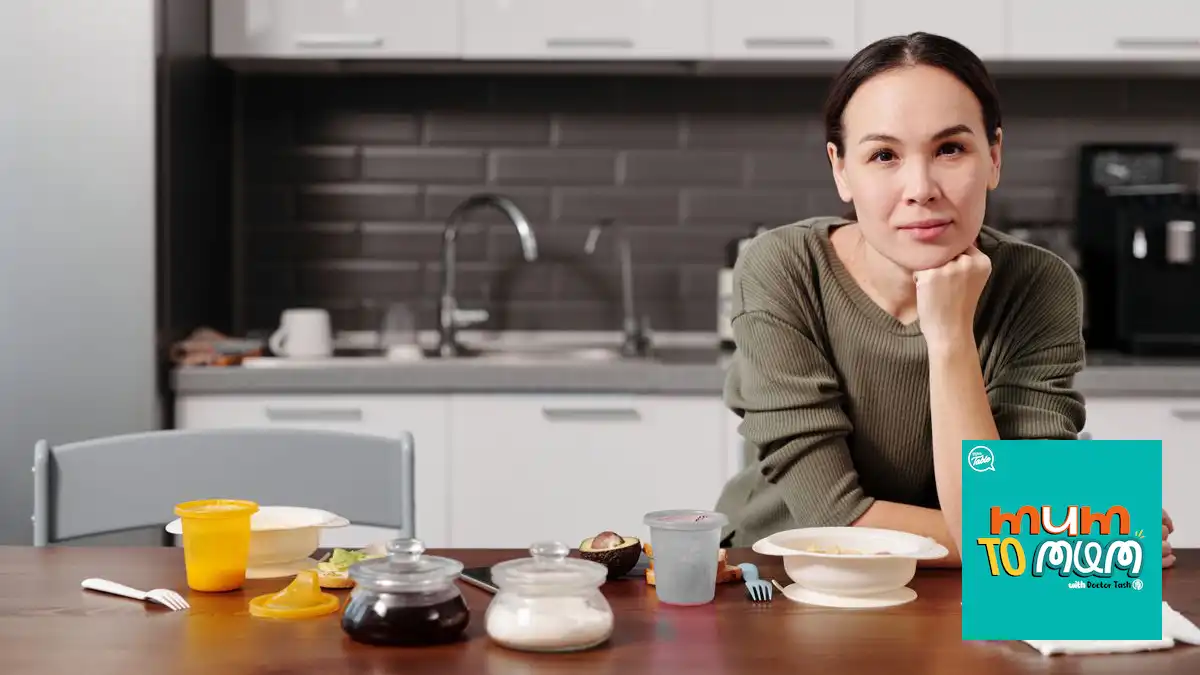
Discover why parenting starts with your own internal load and how learning to ask “What is happening in me?” can rescue you from eruptions.
“Just stop it!” I screamed.
Both boys stopped and looked at me.
“Mummy, don’t shout. You made me sad,” my two-year-old said through the best little pout.
Ouch. He was right.
“I am sorry buddy,” I sighed. “Mummy shouldn’t have screamed. I’m sorry.”
The thing is, my boys had simply been kids that evening. They hadn’t really done anything wrong. They had fought over the ride-on cars outside. Then who got to be with Daddy. And now it was the play kitchen. Everything was entirely in keeping with their developmental age. In fact, if I were honest, both of them had actually shown moments of more mature responses throughout the evening.
Yet there I was, standing in my kitchen, feeling overwhelmed.
Running on empty
It would have been easy to blame the fighting, but I knew that wasn’t true. It had started much earlier. I had been slowly unravelling for hours, even before they had gotten home. And whilst their interaction was triggering me that evening, I knew my reaction was a reflection of me, not them.
For weeks, my neck and back pain had been getting worse. The headaches were constant. I had missed my usual massage appointments because of conflicting demands and I kept telling myself I just needed to push through a little longer.
That evening’s explosion did not start with my boys arguing over their play kitchen. It started weeks earlier when I cancelled my regular appointments that I knew my body needed.
I knew I needed to get treatment, but the timing hadn’t been right. I had it planned for the coming weekend; I just needed to get through a few more days and then I could care for myself.
All day I had been in pain. I had a headache since the moment I’d woken up in the morning and it had been gradually building all day. Even before my kids and husband had walked back in the front door, I was already irritable and ready for bed.
By the time my boys were arguing over the play kitchen that evening, I was running on empty.
Are you tired of feeling like you’re just surviving the daily chaos? Click here to listen to the full episode of Mum to Mum with Doctor Tash as we unpack how to drop the guilt, unpack your heavy backpack and refuel your tank.
How often do we do this?
Put aside our own needs because our family needs us. Because our work needs us. Because someone or something else needs us first. So we put ourselves to the side.
The problem is that our needs don’t simply disappear because we ignore them. My body still needed treatment. I was still exhausted. I was still in pain. And whether I recognised it or not, all of that was influencing how I showed up as a parent. I could not be the mother I wanted to be, the wife I wanted to be or even the person I wanted to be when I was simply trying to survive.
When things get tough at home, we often focus on what our children are doing. Fighting with their siblings, talking back to us, not listening when we’ve asked them to do something. And yes, these things are important. But so is realising that parenting starts with us. It doesn’t happen in isolation. We bring ourselves into every interaction with our children also.
And sometimes, before we ask, “What is happening in my child?” it can be helpful to ask . . .
What is happening in me?
Physical exhaustion. Chronic pain. Poor sleep. Work stress. Illness. Caring responsibilities. Relationship struggles.
Everything happening in our own lives is a load that we are carrying. Some may be visible, but some are not. And those loads can be physical, emotional or mental.
Like carrying a heavy backpack, we can all only carry so much. What each of us can carry will vary and that’s okay. The goal isn’t to compare our load to someone else’s. It’s to understand the load we are carrying ourselves.
None of these loads make us bad parents, but they can definitely contribute to making parenting harder.
Why does understanding this matter?
The thing is, we aren’t often taught to pause long enough to self-reflect in these moments. But if and when we do, we can begin to learn a lot about ourselves also.
There is power in self-awareness.
When we can recognise that there is something happening in us, we can slowly start to learn how to listen to ourselves. To listen to the needs of our body and mind. And then in time, to try to meet those needs.
If you think back to my moment in the kitchen having yelled at my kids, the answer wasn’t a better parenting script. The answer was that I needed treatment, rest and support. I needed to listen to my body and make the time to manage my headaches and my pain.
Often as parents, we find this really hard to do. We feel guilty that maybe we are being selfish to meet our own needs. That we have to care for our children at the expense of ourselves.
Here’s the thing: When we continually ignore our own needs, there is often a cost, not only to ourselves, but to the relationships around us.
We teach what we live
When we disregard our own needs, we reduce our capacity to show up for our children the way they need us to.
The same child can behave in exactly the same way on two different days and receive two completely different responses from us. Why? Because we are not the same on both occasions. The load we are carrying each day will likely look different.
One day, we might be happy. Settled. Well-slept. Life is going well.
Another day, we might be sick. Stressed. Exhausted. Life is a struggle.
What we are carrying ourselves impacts how we turn up for others. And the truth is, that does not only apply to parenting. Think about the last time someone asked you a simple question when you were already overwhelmed. Chances are your response was very different to how it would have been if you were relaxed and well-rested.
Our children experience these differences too. Parenting occurs through relationships. And for each individual in that relationship, we bring our own loads. Sometimes our children can seem to lose it over the smallest of things and we can find ourselves asking, “Woah, what just happened? Where did that come from?”
Our kids also have hard days and big feelings. When we learn how to tune into ourselves and our own needs, and to listen to them, we model that for our children also. We teach them how to stay in tune with themselves. To recognise when their stressors are impacting their relationships. And to learn and establish life-long habits to care for their own physical and mental health.
Final takeaways
My boys had simply been kids that evening. And I had been human.
The problem wasn’t that I loved them any less. The problem was that I had been ignoring what my body was trying to communicate with me. Trying to push through, just a little bit longer, but that had come at a cost.
By continually putting my own needs aside, I was running on empty and I was unable to be the parent I wanted to be that day.
Parenting starts with us. Not because our children aren’t important or because they don’t also impact the relationship and interaction. But because we bring ourselves into every interaction we have with them.
Sometimes, before we ask what is happening in our child, we need to pause long enough to ask, “What is happening in me?”
Tune into the Mum to Mum with Doctor Tash podcast

Parenting isn’t easy and some days, it feels downright impossible. That’s why Mum to Mum with Doctor Tash is here: honest, heart-centred conversations about raising emotionally healthy kids, one connection at a time. Join paediatrician Doctor Tash (Natasha Ching) and host Melody Tan as they unpack the big emotions, everyday struggles and lightbulb moments that come with modern parenting. From tantrums to teen moods, from discipline to self-compassion, each monthly episode offers practical wisdom grounded in science and guided by empathy. This is the place where you’ll find understanding, not judgement. Real talk, not quick fixes. Because parenting isn’t about perfection—it’s about learning, growing and connecting.
NOTE: The information shared in this article and the podcast does not constitute medical advice. It is for general and educational purposes only. Please consult a qualified healthcare professional for advice specific to your situation.