
Here’s how to pass on your family values and raise kind human beings with integrity through simple, everyday moments.
This morning, over breakfast, my teenage daughter and I were talking about her friend’s first relationship.
“She needs to learn to love herself before starting a relationship, don’t you think?” she said.
I nodded. Yes. When did she become so wise?
The fact is, we’ve been having “deep” conversations around the dining table since she was tiny. I remember her younger sister (then a toddler) talking at length about a poor dead magpie.
“But where are her children? Will her children be okay?” she asked repeatedly.
Conversations that matter
Over the years, we’ve talked about kids cheating on tests, about the dangers of social media, about recovering from difficult experiences, about failing and learning to fail successfully, about embracing mistakes.
My husband and I share our experiences. Our kids share theirs. We listen and learn from each other. I’ve learnt more from these conversations than I have from any internet site. Any article. These have always been open, honest, vulnerable conversations that help each other grow. Adults included.
Back when I first became a parent, I read an article that declared that young children didn’t experience empathy. They were egocentric, said the piece. Empathy was something kids needed to develop, and we, as parents, needed to help them.
I was really surprised by this sentiment. It didn’t make sense to me. What about the magpie’s children? If a toddler was so egocentric, would she really care about some bird’s babies that she’d never even seen?
I wondered, not for the first time, whether the adults have all the answers.
Learning and lessons
Years ago, I was charged with writing a book for kids about honesty. Honestly? I was stuck. As a children’s author, the number one thing I had learnt thus far in my career was to avoid being didactic. Kids don’t like lessons, our mentors told us. They come to books for fun. And if you have to have a moral in the story, bury it so deep, a sniffer dog won’t be able to find it.
I, too, don’t like lessons. I am a terrible baker because I rebel against instructions. Cooking dinner is fine because you can add an extra splash of oil and extra clove of garlic. No-one cares. But muffins will not rise unless they are given the precise amount of baking soda.
Being an author suits me perfectly. I am my own boss, I have no real structure and can make up the rules as I go.
I also didn’t want to write lesson books.
I wasn’t even sure if I knew exactly what “honesty” was myself. I mean, I know the basics and try to be honest where possible. But honesty is tricky. What if your friend asks why they weren’t invited to another friend’s birthday? Should you tell them honestly or should you protect their feelings? Complicated stuff.
The real teachers
I turned to the smartest, wisest people I knew for answers. Kids. I rang my daughter’s teacher and asked if I could interview her students. She invited me into the classroom the next day.
“Can anyone tell me what honesty is?” Twenty kids aged six to 10 flung their hands high. They couldn’t get them high enough, they were lifting off the ground!
An hour later, just about everyone in the class had come clean about a time they wished they’d been honest, a time that not telling someone the truth made their stomach hurt, a time when they chose to be honest even though it was the harder thing to do.
I left with a full heart and lots of content for my book. I left feeling like I finally understood honesty.
Kids have an enormous capacity to understand and talk about big topics like integrity, fairness and inclusion. They love being asked about it. Try them! They love it when adults share their experiences and vulnerabilities. They are amazed and surprised to discover that big people make mistakes too. Big people are also learning!
There are no right or wrong answers when we talk about compassion, confidence, fairness, friendship, integrity or inclusion. But there are lots of conversations we can have around them. I would argue that inviting conversation about big topics is not just educational, it’s bonding.
By giving kids a structure and a safe place to sort through the big themes in life—the truly important stuff that makes us human—we create trust. Kids learn that it’s okay to make mistakes. We can say sorry. It’s okay to not always get it right. We’re all still growing.
But if we don’t have these conversations?
Well. Who is guiding our kids? The internet? A stranger?
Traditionally, fairy tales were told to educate kids and adults about morals like, don’t talk to strangers, be aware of jealousy, pride comes before the fall. We come to stories for the entertainment, but the stories last generations—centuries!—because they are about humanness. Connectedness. They transcend culture and era, and continue to resonate with people.
Our modern stories also help transform and maintain society. They keep us in check. When we read about a character on a struggle similar to ours, we might (finally) understand what we need to do differently in our own lives. When we read about a character who lives a different life than us, it’s like opening a window into another perspective.
Stories and books are the starting point. The gateway. The dining table, classrooms, libraries, bedtime reading sessions . . . that’s where we can take these conversations further and really help them make sense to little humans. Furthermore, having these conversations from a young age will build the scaffolding needed for you to continue talking about big themes as your kids grow and face challenges in the future.
Who knows? Us big people might also learn something along the way.
Tips for talking with young kids about values
- Create a safe, welcoming environment for conversation by telling little humans that you are there to listen. Maintain their confidentiality.
- Ask questions. Listen openly and without judgement.
- Flesh out values such as integrity, fairness and being inclusive by using examples from your own life.
- Avoid condemning “bad behaviour” and focus more on the natural consequences for the child and others around them.
- Be vulnerable and prepared to admit mistakes. Kids learn from example.
- Validate little humans by assuring them that you have heard them and encourage them to keep the conversation open.
- Your kids will have their own values and they might not be exactly the same as yours. Be prepared to listen, learn and model respect.
- If you feel out of your depth, or the big conversations raise concerns, please involve a professional for advice.
Read next: 25 best read-aloud books
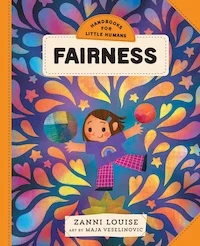
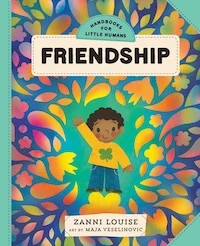
If you’re looking for guidebooks to start conversations with little people in your life, check out the Handbooks For Little Humans series by Zanni Louise (Affirm Press).