
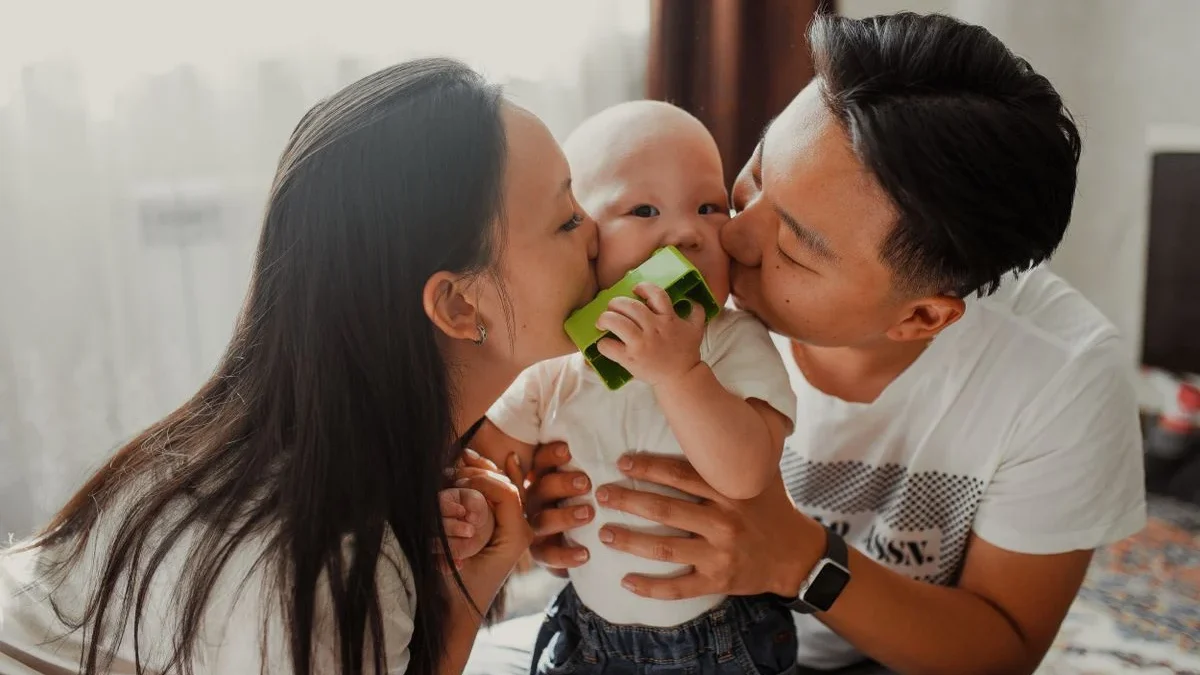
We look at why so many Aussie families are choosing to have only one child and how it’s working out for them.
For a long time, the “normal” Aussie family was thought to include two or more kids. A house full of siblings, noisy dinners, shared bedrooms and an annoying younger sibling driving everyone crazy seemed like the standard picture of family life.
But things are changing. Across Australia, single-child families are growing and many parents are feeling happier and more confident in deciding to stop at one child. For some, it is about finances. For others, it comes down to mental health, pregnancy complications or simply feeling complete as a family of three.
The truth is, there is no perfect family size. What works for one family may not work for another. For a growing number of Aussie parents, one child feels exactly right.
Why more families are choosing one child
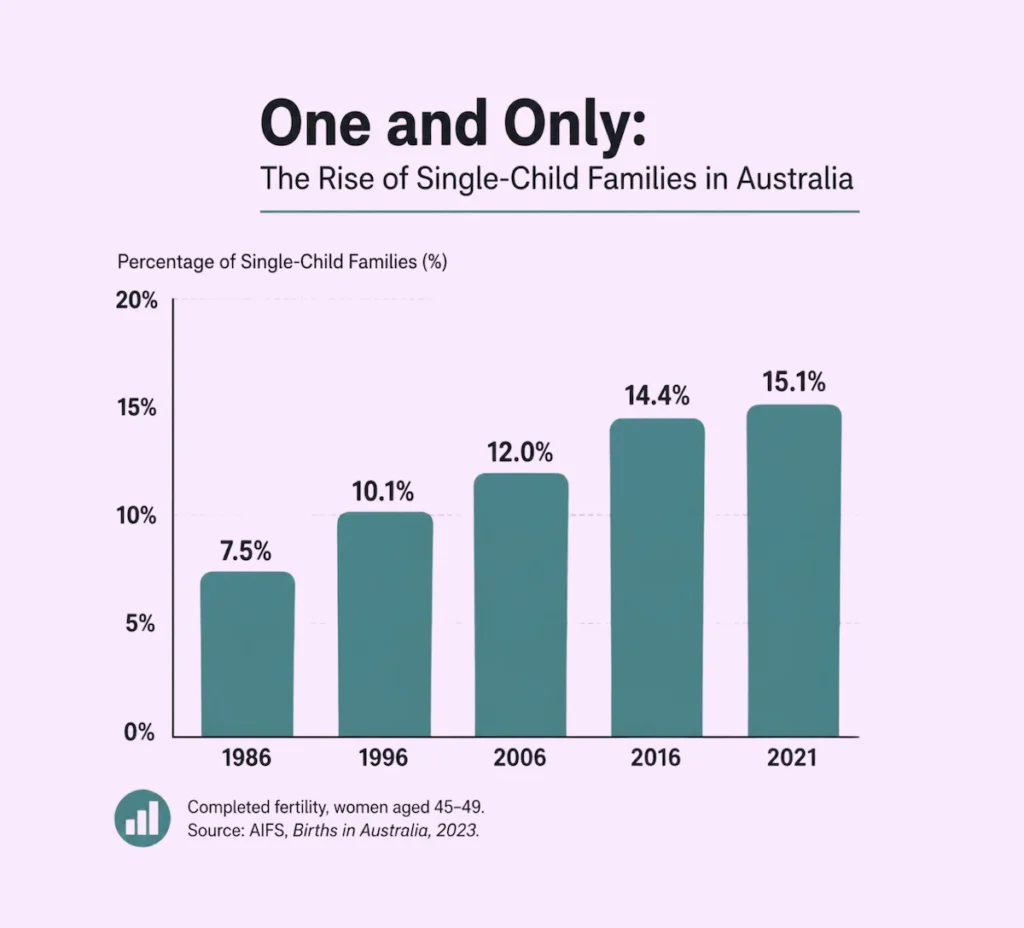
The number of single-child families in Australia has doubled since the 1980s. Of the 7.7 million families, more than a million are so-called “triangle families”.
Australians are having fewer babies than they used to. The fertility rate will soon drop to 1.42 babies per woman, which is well below the 2.1 generally believed needed to keep the population stable without migration. This rate has actually been below replacement level since 1976, and is showing a steady long-term decline. It’s a situation reflected in many other countries, and which has politicians and demographers concerned about its impact on society and the economy.
In 2021, around 15 per cent of women aged 45–49 in Australia had only one child, double the number in 1986. While two-children families are still the most common, having one child is now widely accepted and increasingly normal. Research suggests this change is mainly because parents are choosing to have fewer children overall, rather than large increases in people not having children at all.
There are plenty of reasons why parents decide not to have a second child. Sometimes the decision is made early. Other times it happens slowly over time:
Family balance
After the baby stage passes and life settles down, many parents realise they genuinely enjoy the balance they have created. They can manage work, parenting, relationships and daily life without feeling completely stretched.
Finances
Many parents feel they can have more financial freedom with one child. They may also have more opportunities and experience better stability without the financial pressure that sometimes comes with larger families.
Emotional or physical
Pregnancy complications, postpartum anxiety, difficult births or struggles during the first 12 months can have a lasting impact. Some parents know they do not want to go through the newborn stage again. Others simply do not feel the desire for another baby.
The mental load is real
Managing a household, remembering appointments, organising school activities, preparing meals, handling unpaid labour around the home and trying to squeeze in adult conversation at the end of the day can feel exhausting.
For many one-child families, having one child creates a more manageable lifestyle. There is often more time, more flexibility and less pressure trying to meet everyone’s needs at once.
That does not mean parenting one child is easy. Kids still need attention, emotional support and endless snacks. But many parents feel they are able to be more present and patient when they are not overwhelmed caring for multiple children.
Some mums also say having one child has helped protect their mental health and allowed them to maintain a strong relationship with their partner.
“Won’t they be lonely?”
One of the biggest questions parents wonder about is whether a single child will grow up lonely. For many women, this can be a major contributing factor to feeling pressure around their family size and whether to have a second child. There is often a sense of guilt or worry that they might be “stealing” a sibling from their child by not having another.
People often assume kids need siblings to build social skills or learn how to share, compromise and manage relationships. But child development experts say friendships, cousins, school communities and social activities also play a huge role in helping children grow socially and emotionally.
Many only-child families actually build very social lifestyles. Their kids often spend plenty of time with friends, neighbours, teammates and extended family members.
While siblings can become best friends, that is also not always the reality. Plenty of adults with brothers or sisters will admit they fought constantly growing up or barely speak now. Having siblings does not automatically guarantee a close bond, just like being a single child does not automatically mean loneliness.
While no parent wants their child growing up with “only child syndrome”, the truth is that behaviour can happen in larger families too, especially if one child is always allowed to dominate the attention and spotlight. What matters most is teaching empathy, patience, independence and healthy social skills.
You may need to put a little more effort into encouraging friendships, family time and social activities, but for many parents, that feels like a worthwhile trade-off for a calmer, more manageable family life.
More time and attention
One reason some parents love having one child is the ability to give them undivided attention. With one child, daily life can feel less rushed. Parents may have more time to help with homework, attend school events, enjoy family outings or simply sit and talk at the dinner table.
There is also often more flexibility financially and emotionally. Some parents can travel more easily, save money or return to work sooner without juggling multiple childcare schedules.
Even simple things like weekend sports or bedtime routines can feel easier with one child in the mix. Many mums say they enjoy parenting rather than trying to survive it.
Social media pressure around family size
Social media can sometimes make parents question their choices. Scrolling through picture-perfect families with multiple kids in matching outfits can make some mums wonder if they should be trying for a second child. There is often pressure around giving your child a sibling or creating the “ideal” family.
Parenting expert Dr Rosina McAlpine has spoken about the importance of parents making choices based on what is healthiest and most sustainable for their own family, not outside expectations. She says research has repeatedly disproven the idea that only children are worse off than kids with siblings. The stereotype dates back to outdated studies from the late 1800s, which wrongly claimed being an only child was harmful.
More recent research, including studies by Professor Toni Falbo, found that only children generally perform just as well socially and academically as children from two-child families, and often better than kids from larger families. Dr Rosina says only children are no more likely to grow up selfish or lonely. Many parents are also opting out at one child because they don’t feel they’ve found their “village”.
Author Lauren Sandler shares a similar perspective to Dr Rosina. As an only child herself, and now a parent to an only child, she explores this experience in her book, highlighting the sense of freedom, balance and joy that can come from raising a single child.
At the end of the day, responsible parenting means understanding your limits and making decisions that support your family’s wellbeing. Family size isn’t what defines a family, because many households are led by single parents, and these families are just as valid and important.
Single mothers may at times feel the desire to have more children, but also recognise that it may not be feasible or the best long-term choice. Instead, many choose to build a full, happy life with their one child, focusing on stability, wellbeing and what truly works for their family.
The guilt around being “one and done”
Even when parents feel confident in their choice, guilt can still creep in. Some worry their child will miss out on sibling memories. Others feel pressure from relatives constantly asking when the second child is coming. Mums especially can feel judged no matter what decision they make.
Family size is deeply personal. There is no magic number that guarantees happiness. Some parents thrive with multiple children. Others feel happiest and healthiest with one child. Both choices are valid.
What matters most is raising kids in a loving, stable, emotionally healthy environment.
Families look different now
The idea of the “traditional” family has changed a lot over the past 40 years. Today, families come in all shapes and sizes. Whether you have one child or six, it’s important you are doing what is best for you and your family in the long run.
What matters is not how many kids are sitting around the dinner table. What matters is whether children feel safe, loved, supported and connected to their mum and dad.
For many Aussie parents, choosing one child allows them to create the kind of family life they truly want. A calmer home. Less financial stress. Better mental health. More balance. And for them, that feels like the right thing.
If you feel you can give your child a happy, stable life, be a present parent and still enjoy other meaningful parts of your life, but you’re not sure you could do that with more children, it’s completely okay to say, “One is enough.”
Read next: Please stop telling me to have another child